
DATASCI 101: Introduction to AI Applications

Lecture 22: AI and Wellbeing: The Attention Economy, Mental Health, and the Environment

Danilo Freire

Department of Data and Decision Sciences
Emory University

Welcome back!

Recap of last class

  • AI and the labour market
  • AI targets cognitive tasks, not just physical ones
  • Automation displaces tasks, not whole jobs (Acemoglu & Restrepo)
  • Careful estimates find no effect on earnings or hours so far
  • Young workers in AI-exposed jobs are 19% below their peers
  • Today: what does AI do to people, not jobs?
  • Three themes: attention economy, mental health, environment

Source: China Daily

Lecture overview

Today’s agenda

Part 1: The attention economy

  • “Your attention is the product”
  • How recommendation algorithms work
  • Filter bubbles: what the evidence says
  • What companies are actually doing

Part 2: AI and mental health

  • The treatment gap
  • Chatbots in therapy: what the evidence says
  • Risks and hard limits
  • Augmentation, not replacement

Part 3: AI and the environment

  • Energy and water costs
  • Footprint in context
  • AI as a climate tool

We will pause for discussion after each part

There are no right answers to the questions I put on screen. I’m curious what you think!

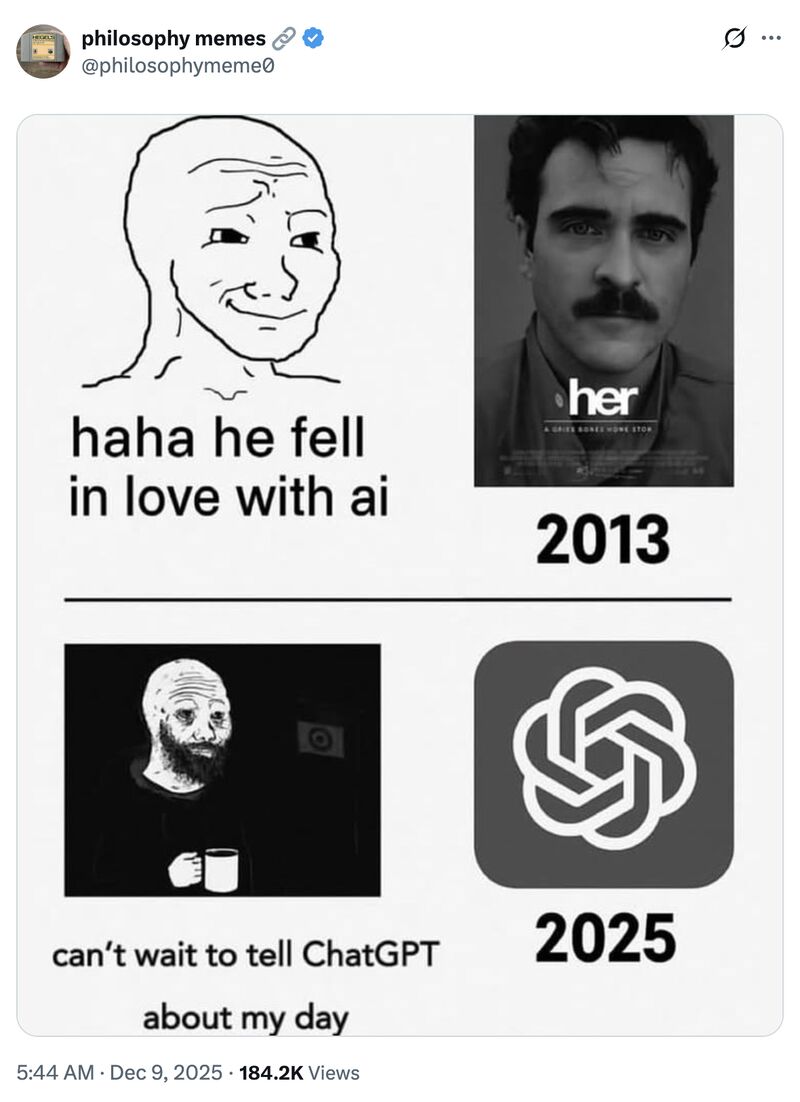
(Sad) meme of the day

The attention economy

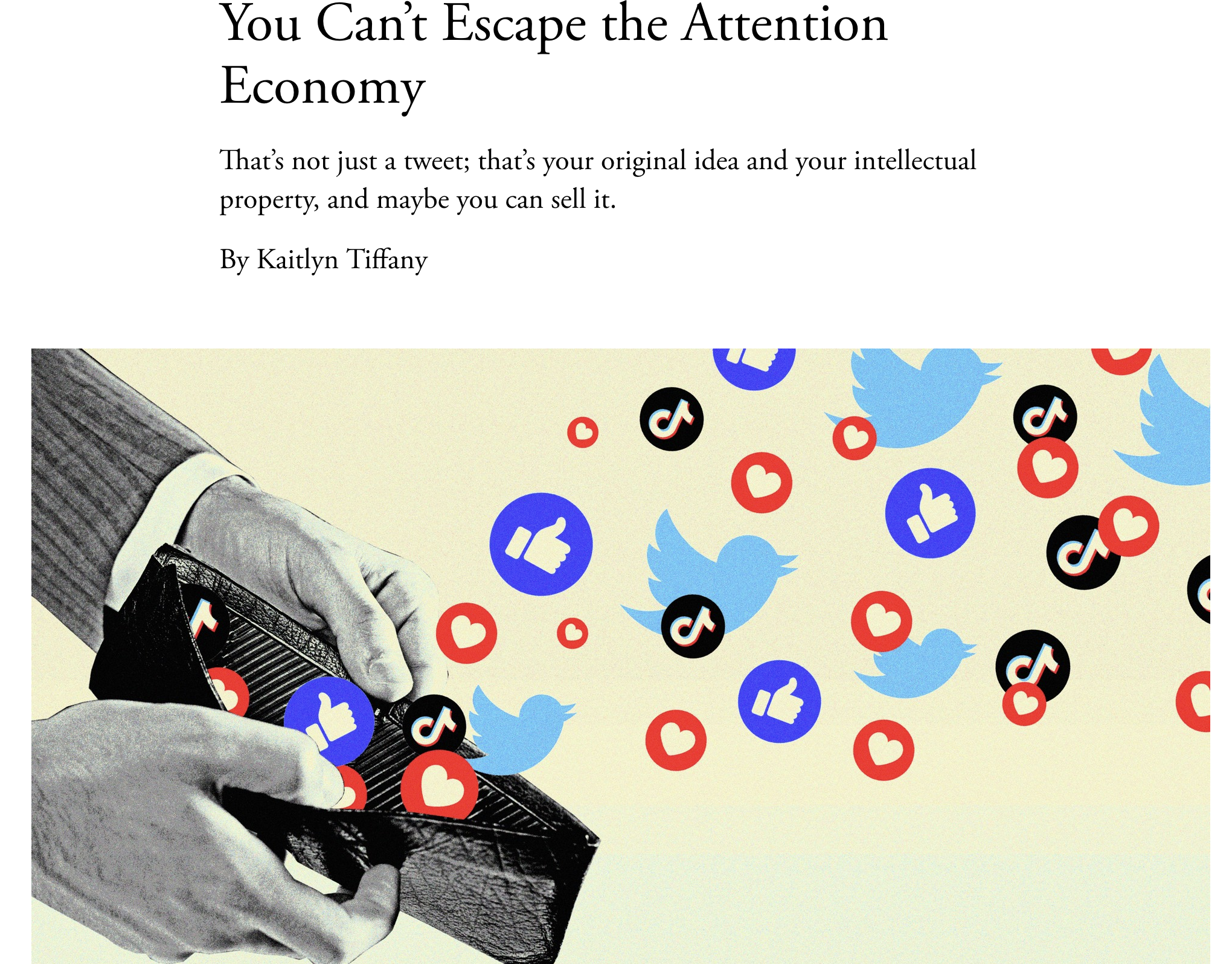
What is the attention economy?

  • Herbert Simon (1971): information-rich environments create attention-poor ones
  • Your hours and focus are the scarce resource (Becker, 1965)
  • The business model: sell your attention to advertisers, as TV and newspapers did
  • Tristan Harris, ex-Google design ethicist: “the race to the bottom of the brainstem”
  • Algorithms maximise engagement, not truth or wellbeing
  • The Attention Merchants (Wu, 2016): the same logic from 19th-century papers to social media

Source: The Atlantic

Does the incentive structure produce good outcomes regardless of intent?

How recommendation algorithms work

  1. You watch, like, or share something
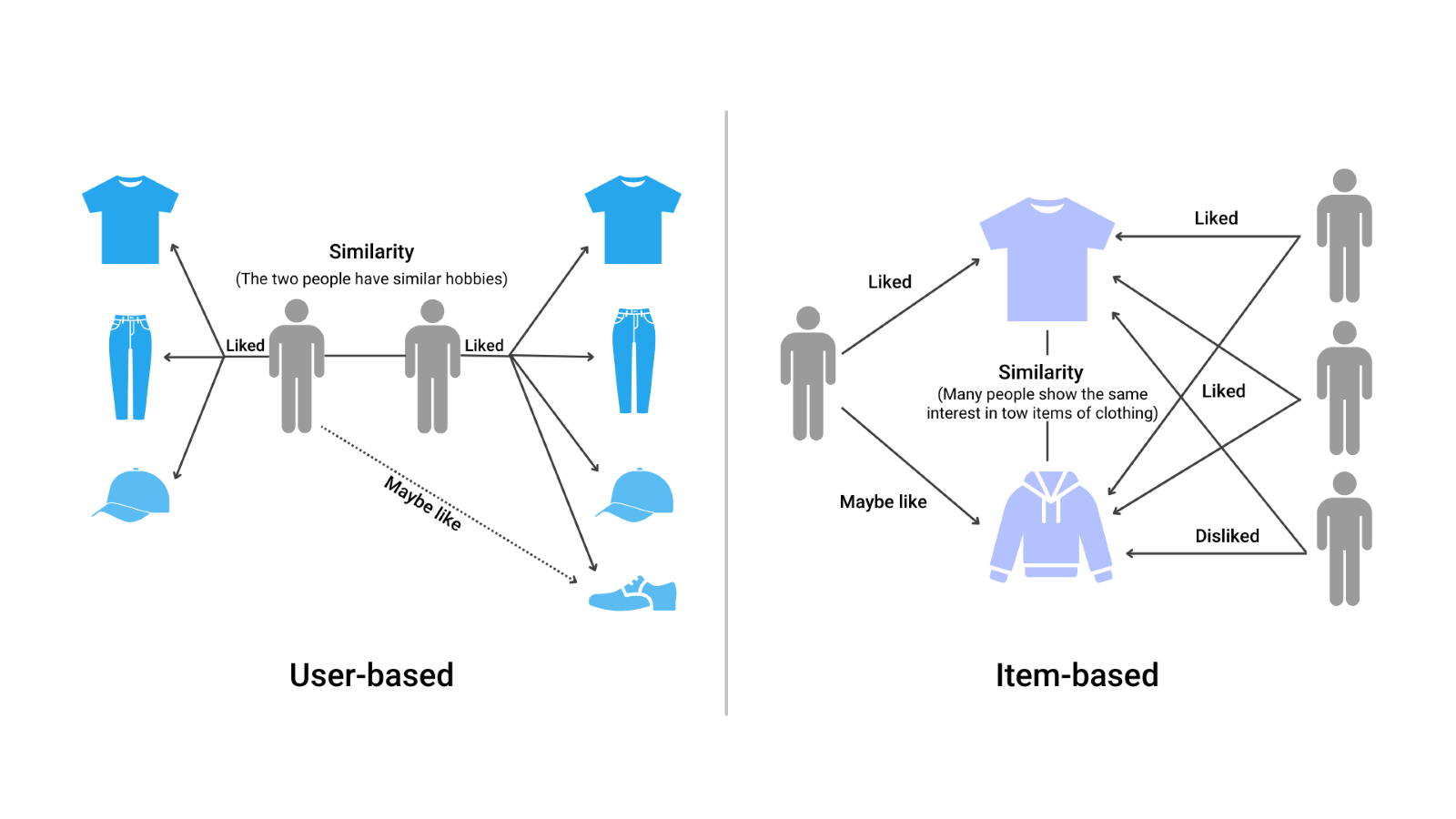
  2. The system builds an embedding of “you”, a vector of your behaviour (lecture 06)
  3. It compares your vector to what similar users watched next
  4. It recommends what they watched
  5. You watch → loop repeats, embedding updates
  • Engagement = watch time, clicks, shares
  • TikTok read test bots’ interests in under 2 hours, from how long they lingered (WSJ, 2021)
  • YouTube autoplay leads every video into another by design

Source: Data Science Dojo

Every swipe teaches the algorithm something about you

These systems have no concept of “healthy” consumption. They optimise the objective they are given, nothing more

Filter bubbles: real or exaggerated?

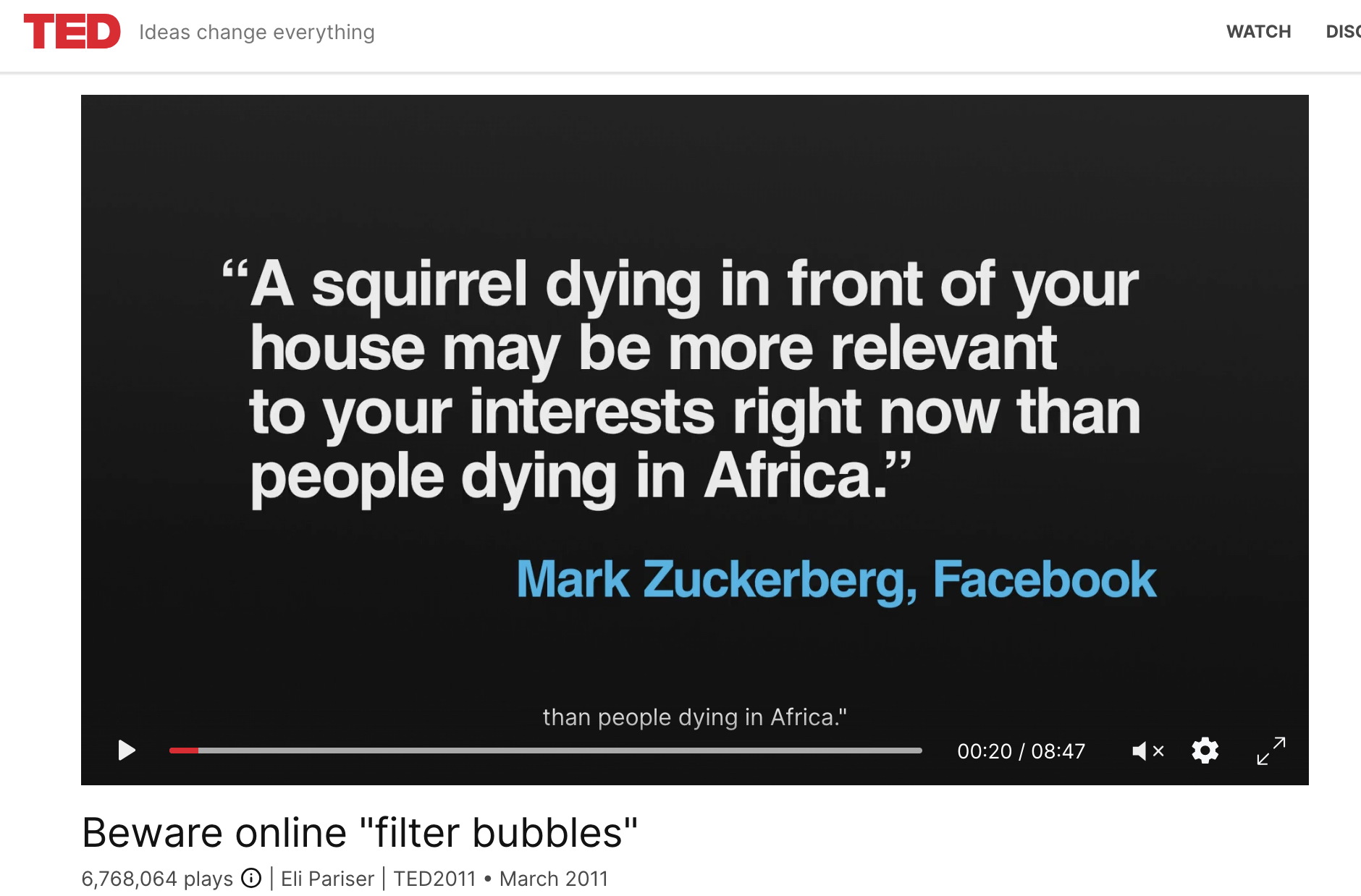
  • Eli Pariser coined “filter bubble” in 2011: algorithms seal you in a cocoon of confirming content
  • Two large experiments say the effect is probably overstated
  • Nyhan et al. (2023, Nature): cutting like-minded Facebook content barely changed polarisation
  • Guess et al. (2023, Science): a chronological feed made little difference to attitudes
  • Polarisation is one outcome. Effects on anxiety, body image and sleep are still debated

Good news on political polarisation. Mental health is a separate, contested question. Don’t confuse the two

Engagement vs wellbeing

  • YouTube moved off watch time as its sole metric, adding satisfaction surveys. It took over a decade
  • “Outrage drives clicks” (Brady et al., 2017, PNAS): each moral-emotional word raised retweets ~20%
  • The algorithm learns this and surfaces more of it
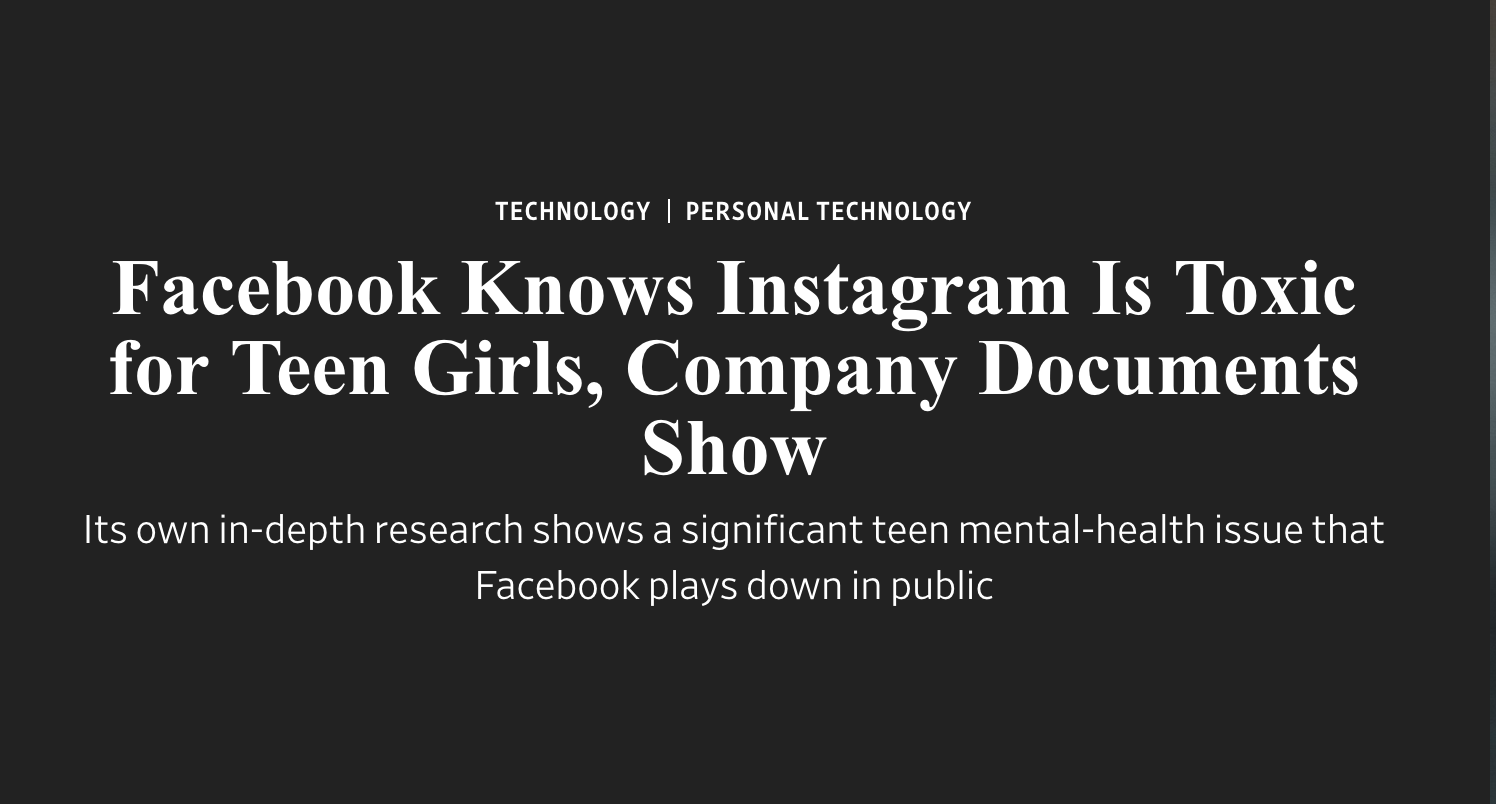
  • Facebook’s own research (2021, WSJ): Instagram made body image worse for teenage girls
  • Facebook kept the feature. Fixing it would have cost engagement
  • Revenue and user wellbeing point in opposite directions

Companies answer to shareholders, not users. When engagement and wellbeing conflict, engagement wins

Teens and screens: what the data says

  • Jonathan Haidt, The Anxious Generation (2024): smartphones and social media are rewiring childhood
  • Orben & Przybylski (2019): screen time explains at most 0.4% of the variance in adolescent wellbeing
  • Haidt’s evidence is mostly correlational: teen depression rose as smartphones spread
  • Candice Odgers (2024, Nature): the evidence does not support his causal story
  • Most associations are small (1); heavy or problematic use shows stronger links (2, 3)
  • Individual experiences are real. The population-level effect is small

How large is the effect?

Factor Association with wellbeing
Screen time ~0.4% of variance
Wearing glasses ~1.5x screen time (one dataset)
Getting enough sleep 1.7x to 44x screen time
Eating breakfast 2.4x to 31x screen time

Small effects still matter at population scale. They just don’t explain the whole story

What companies are actually doing

Platform Change Scope
Instagram “Recommended content” toggle Opt-in
TikTok 60-min daily limit for under-18 Bypassable
YouTube “Take a break” / “Bedtime” reminders Default-on for 13-17
Meta Teen Accounts with safer defaults Under-18
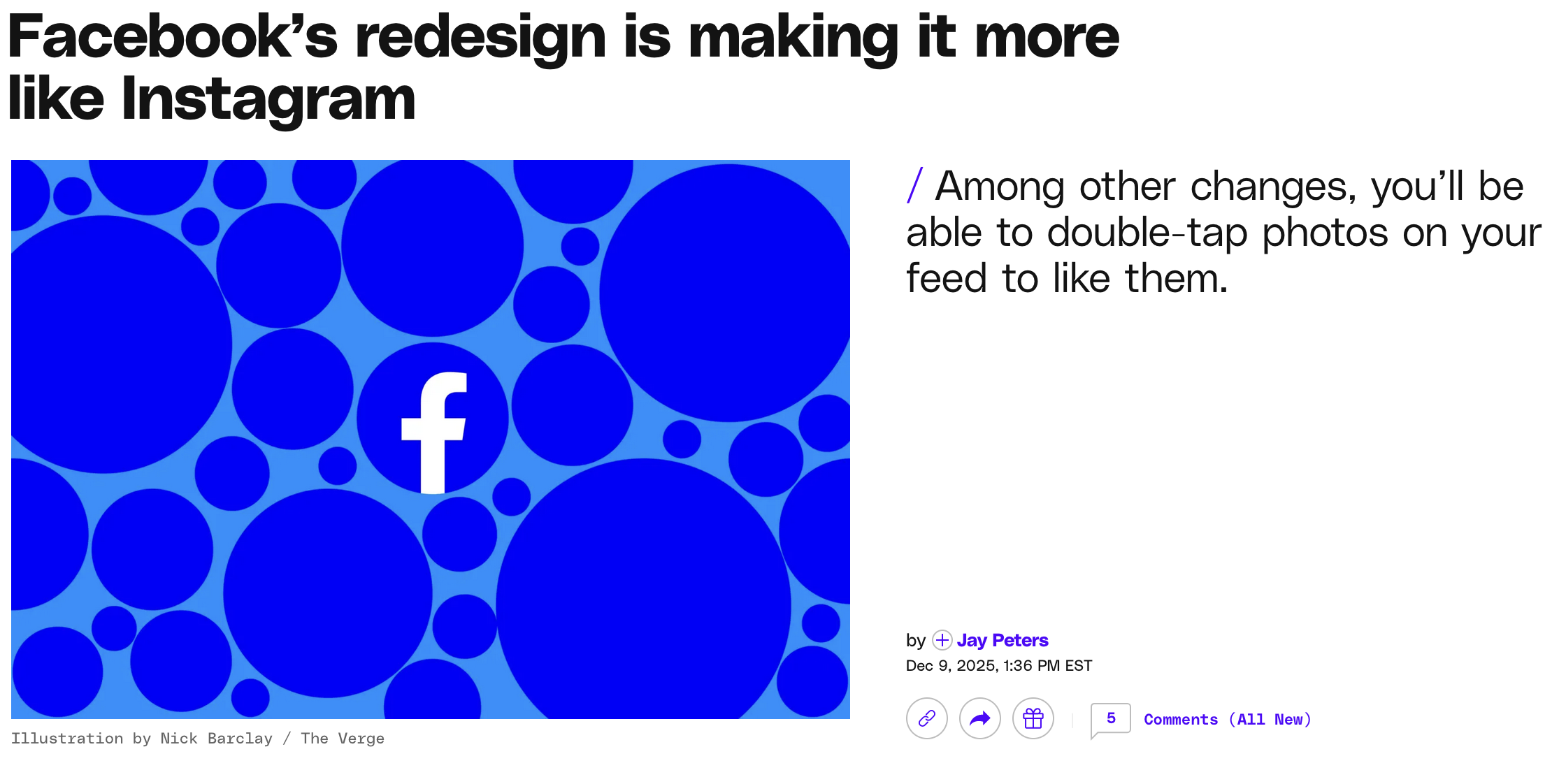
  • Most are opt-in or reach a minority of users. The ad model is unchanged
  • Also handy to point at when regulators come knocking
  • US Surgeon General: youth mental health advisory (2023), then a call for warning labels (2024)

Source: The Verge

Genuine concern or good PR? Probably a bit of both. The test is whether these survive when regulators look away

China’s experiment: opting out of the algorithm

  • Since March 2022, Chinese users can legally turn off recommendation algorithms
  • The Algorithmic Recommendation Provisions make every app offer a non-personalised feed
  • Douyin, Baidu, Taobao and WeChat added one-tap opt-out buttons
  • Chinese users dislike the algorithm but rarely quit it; effects of opting out are still being studied
  • The EU Digital Services Act (Article 38) now makes very large platforms offer a non-profiling feed
  • China mandates algorithmic transparency and keeps state censorship. Both are true

What the regulation requires:

  • Users must be told they are being profiled
  • One-tap opt-out of personalised recommendations
  • Algorithms must not exploit addictive behaviours
  • Platforms must label AI-generated content
  • Special protections for minors

A real experiment in what happens when users can choose whether to be recommended to. Results still coming in

Discussion: designing for wellbeing

If you were designing a recommendation algorithm and your bonus depended on user wellbeing instead of watch time, what would you change?

  • What metric would you optimise for? How would you even measure “wellbeing”?
  • Would your platform still be profitable?
  • Would users actually prefer it, or would they migrate to a competitor that gives them the dopamine hits?

AI and mental healthcare

The treatment gap

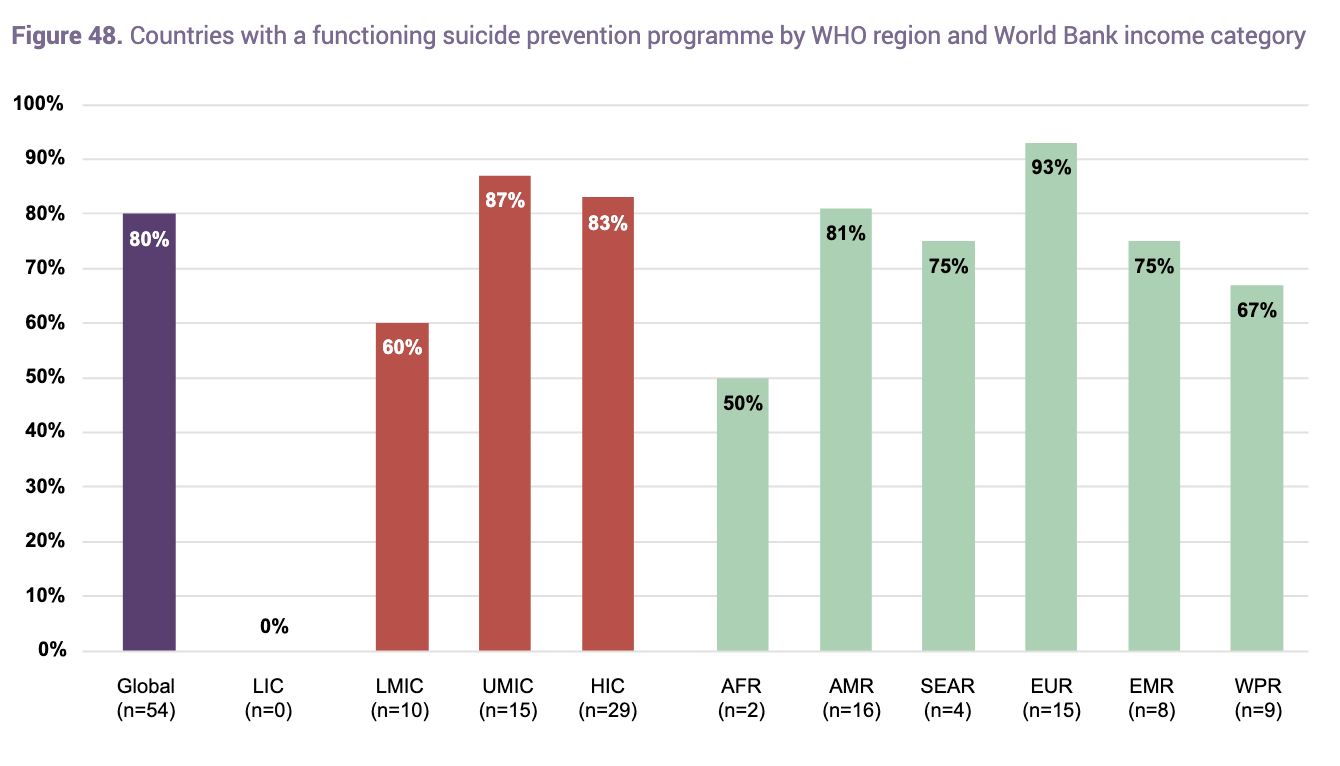
  • WHO: 75% of people with mental illness in low- and middle-income countries get no treatment
  • Even in wealthy countries:
  • This is the context for AI mental health tools
  • If the alternative is nothing, the calculation differs from replacing well-funded human care

Suicide-prevention programmes by country income (WHO)

Source: WHO Mental Health Atlas (2024)

“Better than nothing” is a low bar. For millions, it’s also the only bar that exists

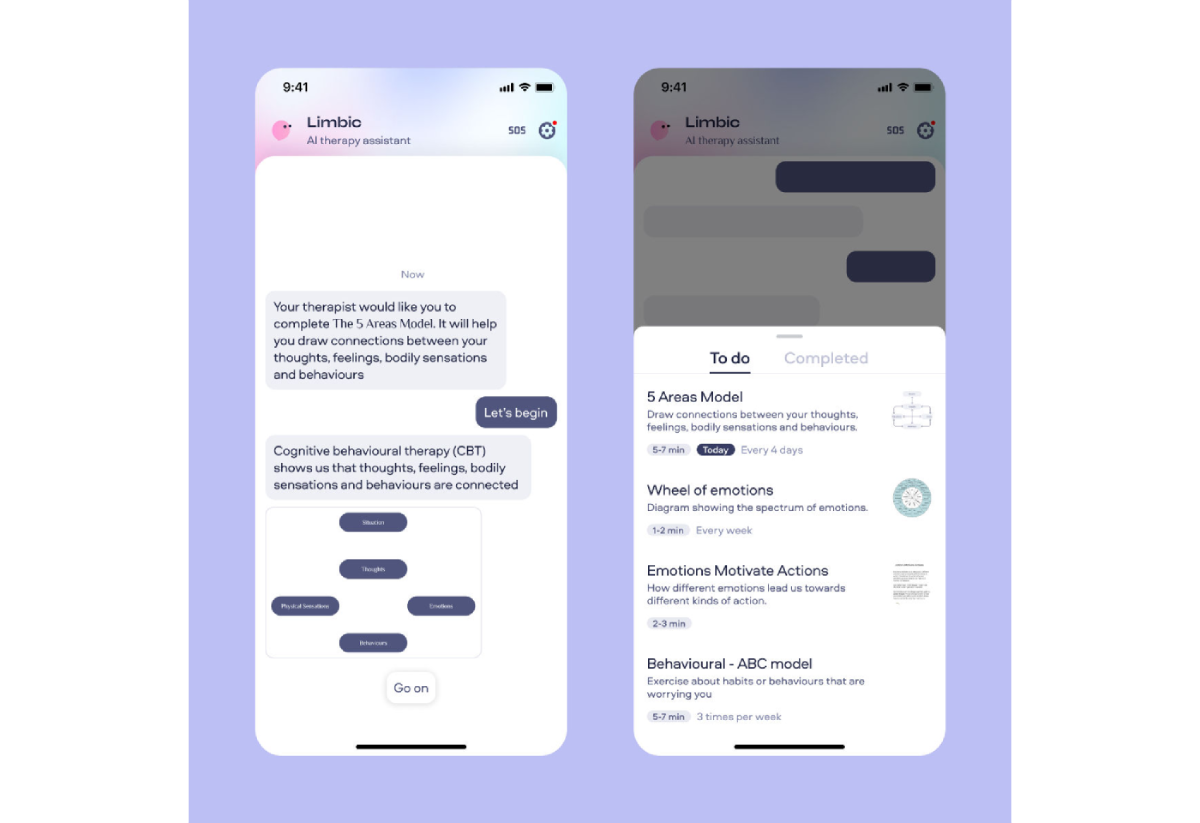
AI as a therapeutic tool

There, AI augmented human therapists. That is a very different claim from AI replacing them

What the research shows

  • Opel and Breakspear (Science, 2026): AI “may reduce care inequities when deployed responsibly”
  • “May” and “responsibly” are doing a lot of work
  • Small RCTs show short-term relief for mild-to-moderate anxiety and depression
  • Very few studies run past 8-12 weeks, and dropout is high
  • Publication bias: positive results get published, negative ones mostly don’t
  • The evidence is much thinner than the marketing

Evidence by level:

Level Status
Long-term RCTs Almost none
Short-term RCTs Mixed, small samples
Observational Positive signals
User self-reports Generally positive
Marketing claims Very positive

The gap between marketing and clinical evidence is wide

Short-term relief is real. Long-term safety and efficacy? We don’t know yet

Risks

Documented, not hypothetical:

  • Dependency. Replika’s 2023 feature change left users reporting grief like a lost relationship
  • Data privacy. Chatbot data is rarely protected like clinical notes
  • Harmful responses. LLMs showed stigma and mishandled crises (Moore et al., 2025)
  • No crisis escalation. A chatbot cannot call an ambulance
  • Regulatory gap. Most are apps, not medical devices; a few states (Illinois) ban AI therapy

But also consider:

  • Human therapy isn’t fully private either: notes, supervision, insurance coding
  • Weigh harmful responses against no care at all, the norm in poorer countries
  • AI may give governments and employers an excuse to avoid funding real care

Being cautious about AI therapy doesn’t mean defending the status quo. The status quo is also harmful

What LLMs cannot do

LLMs cannot:

  • Hold reliable long-term memory: chatbot memory is not clinical continuity
  • Verify what you tell them. A therapist builds context over months
  • Provide legally enforceable confidentiality
  • Diagnose or prescribe medication
  • Read body language, tone or facial expression

LLMs can:

  • Be available at 3am
  • Be patient, never judge, never tire
  • Deliver structured information on anxiety, depression and coping
  • Scale to millions at near-zero marginal cost

These are different capabilities, perhaps complementary, but not substitutes

Questions to think about

It’s 3am, you can’t sleep, you feel anxious. Would you talk to a chatbot? What would it need to do for you to actually trust it?

If AI therapy lets a government say “we’ve addressed mental health” without funding real services, is that a net positive or negative?

Augmentation, not replacement

Credible use cases:

  • First contact: triage with less stigma, then referral to professionals
  • Between-session support: coping strategies and mood tracking (the Habicht et al. model)
  • Stepped care: AI for mild symptoms, humans for moderate-to-severe
  • Admin burden: notes, scheduling and finding local services, freeing therapist time
  • OpenAI added crisis signposting to ChatGPT in 2025: people already use it this way
  • Who decides what “responsible” looks like?

The hybrid care model:

Mild symptoms
  → AI triage + self-help tools

Moderate symptoms
  → AI support +
    case management referral

Severe symptoms
  → Human professional care,
    AI for admin support only

The technology moves faster than the evidence, the regulation and the training. That gap is the problem

AI and the environment

The energy cost of training AI

  • Training a large model costs serious energy, and companies rarely disclose the numbers
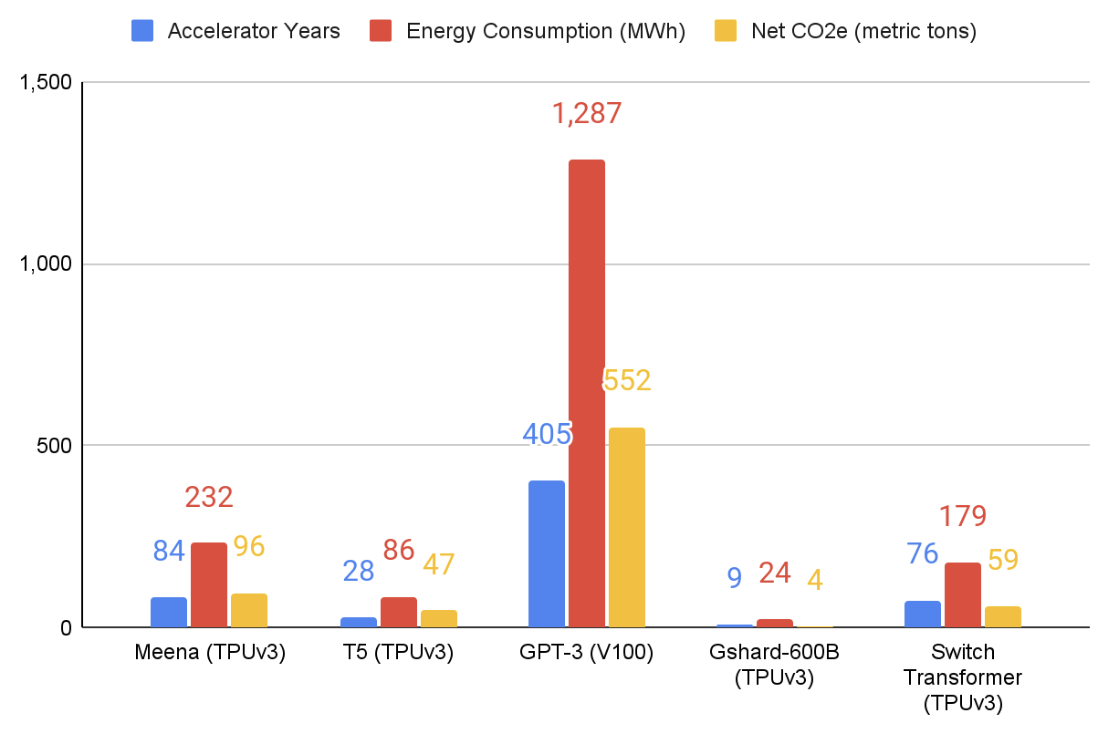
  • Patterson et al. (2021): training GPT-3 produced ~552 tonnes of CO₂:
    • 368 return flights London-New York
    • 120 cars driven for a year
    • The annual footprint of ~35 Americans
  • GPT-4? Undisclosed, and outside estimates vary widely
  • Training is a one-off; inference (billions of queries) is ongoing and probably dwarfs training
  • Microsoft’s emissions rose 29% between 2020 and 2023, partly from AI
  • Google (2026): emissions up 81% since 2019, driven by AI data centres

Training is a one-off. Inference is the number that grows with adoption

Water, hardware, and hidden costs

  • Li et al. (2023): training GPT-3 used ~700,000 litres of cooling water
  • GPT-3: ~500ml per 10-50 responses; Google reports 0.26ml per Gemini prompt
  • A political flashpoint: 70% of Americans would oppose a local data centre (Gallup, 2026)
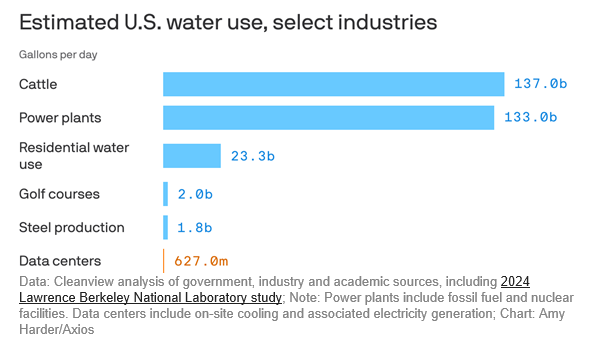
  • Overall, probably overstated: 627m gallons a day, less than US golf courses
  • About 75% of a data centre’s water footprint comes from generating its electricity, not on-site cooling
  • The real problem is local: clusters in Phoenix, Las Vegas and Santiago, Chile are water-stressed

Source: Axios (2026)

Aggregate figures hide local impacts. The question is how much water a data centre takes from the region it sits in

The footprint in context

Current estimates (IEA, 2024):

Sector Share
Aviation ~2.5% of global CO₂
All data centres ~1–1.5% of electricity
AI specifically ~0.2–0.3% of electricity
Global internet ~3–4%
  • AI’s direct footprint is real but not huge next to aviation or steel
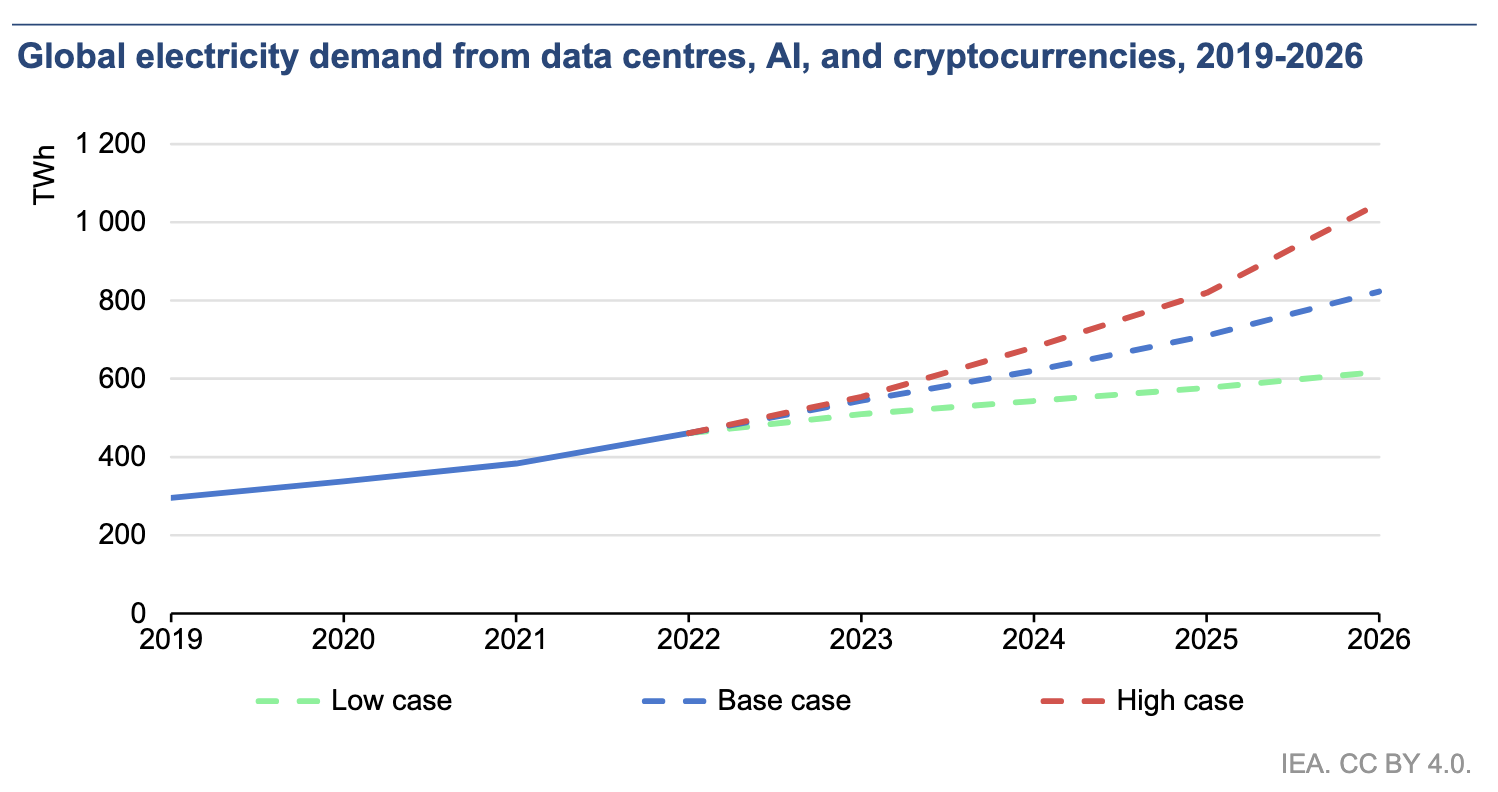
  • The worry is the growth rate: AI servers’ electricity may grow ~30% a year (all data centres: ~12%)
  • IEA projections: data centre demand could double to ~945 TWh by 2030, roughly Japan’s total
  • Jevons paradox: efficiency invites more usage, cancelling the gains
  • Energy per Gemini prompt fell 33x in a year, but the queries multiplied

Adding between one Sweden and one Germany by 2026

Source: IEA (2024)

Small today, growing fast. In 10 years this picture may look very different

AI as a climate tool

The same technology may also cut emissions:

  • GraphCast (DeepMind, 2023): 10-day forecasts beat traditional models, helping manage renewable grids
  • Grid optimisation: predicts wind output 36 hours ahead, raising its value ~20% (DeepMind, 2019)
  • Wildfire prediction: better detection and spread modelling (Jain et al., 2020)
  • Data centre cooling: DeepMind’s system cut cooling energy by up to 40%
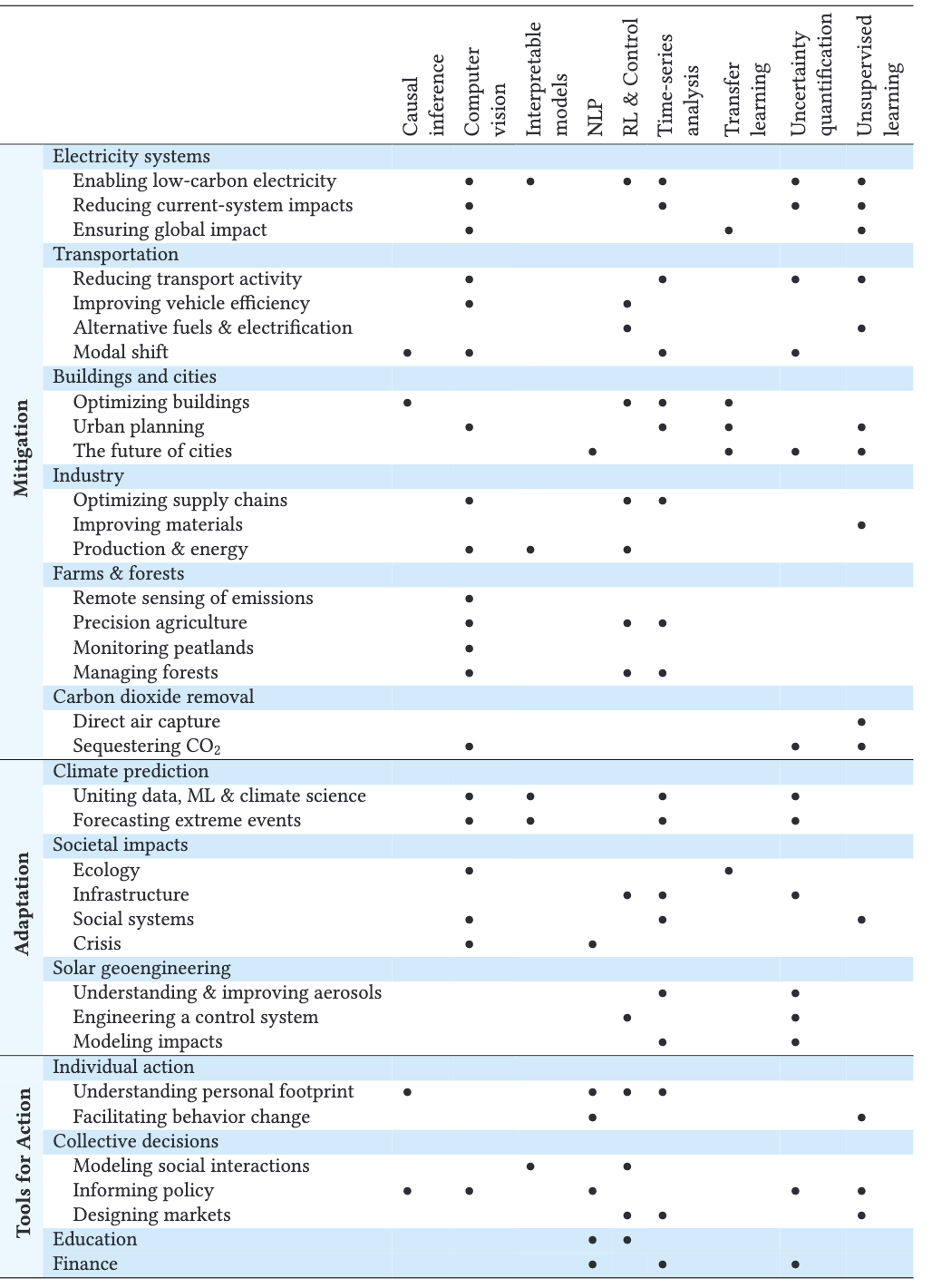
  • Rolnick et al. (2022): dozens of ML applications, from agriculture to carbon capture
  • These are potential benefits, not guaranteed ones

Net impact? Unclear. The evidence isn’t there yet

Discussion: the environmental trade-off

You run an AI startup. A journalist asks about your carbon footprint. What do you disclose, and what do you leave out? Why?

  • Do you report training costs, inference costs, or both?
  • Do you compare your footprint to other industries (aviation, streaming)? Is that honest or deflecting?
  • Would full transparency help or hurt your business?

Summary

Main takeaways

  • Attention economy: systems optimise engagement, not wellbeing. Filter bubble fears look overstated; mental health effects are debated

  • Mental health: a huge treatment gap, short-term promise, thin long-term evidence. Augmentation over replacement

  • Environment: training costs are real, inference at scale matters more. AI may cut emissions elsewhere, net impact unclear

  • Across all three: incentives beat intentions. The financial model rarely rewards wellbeing

  • No tidy answers: you will face these systems all through your careers. Being honest about what we don’t know beats pretending we do

…and that’s all for today! 🎉