DATASCI 101: Introduction to AI Applications

Lecture 21: Labour Markets and Economic Effects

Danilo Freire

Department of Data and Decision Sciences
Emory University

Welcome back! 💼

Recap of last class

  • AI collects data at scale and infers sensitive traits
  • GDPR (EU): rights of access, erasure, portability
  • US: sectoral laws (health, finance) plus 23 state privacy laws
  • Differential privacy, federated learning, synthetic data help, with trade-offs
  • Collected data can help people or track them
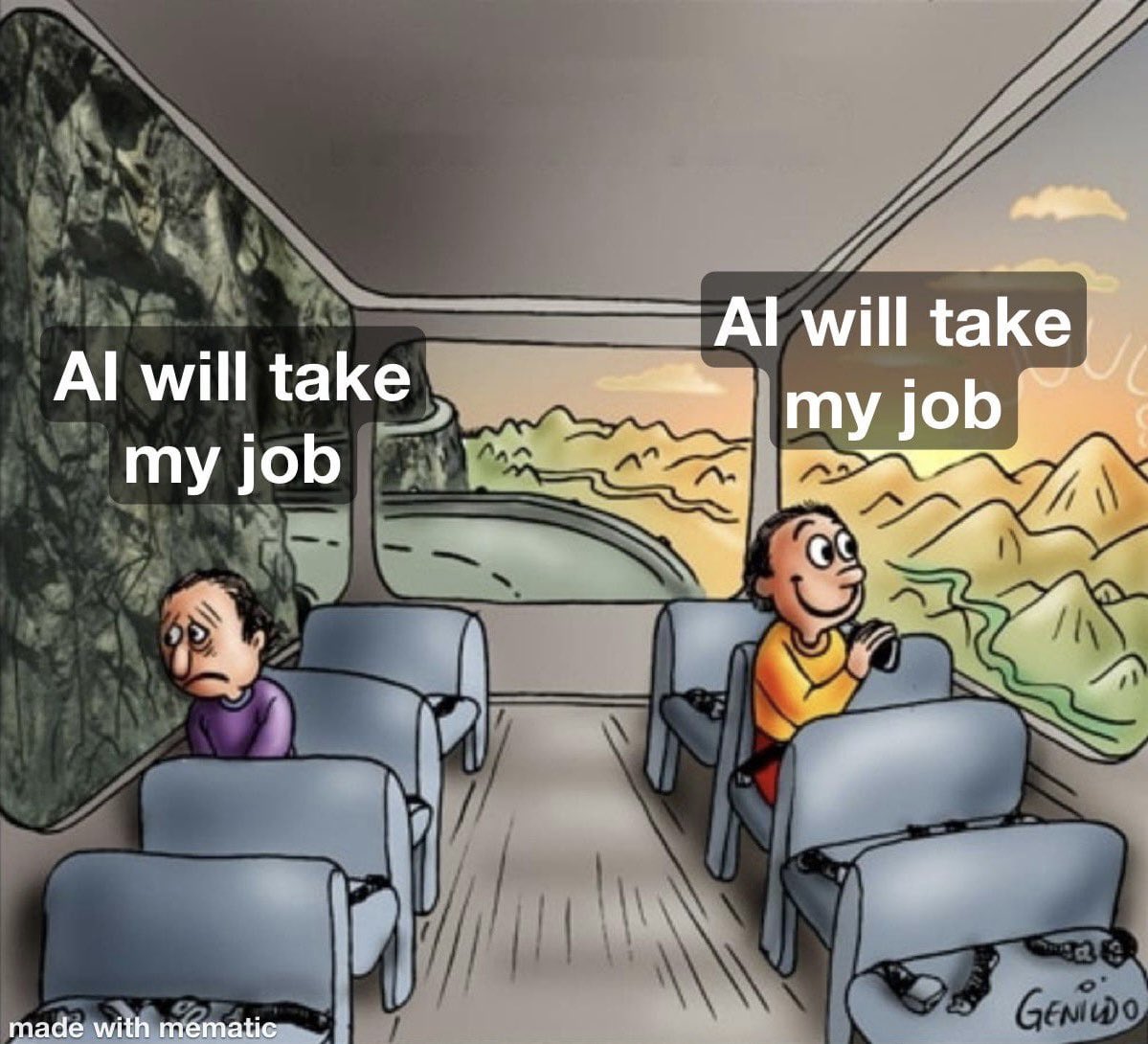
  • Today: what does AI mean for jobs and the economy?

Source: X.com

Lecture overview

What we will cover today

Part 1: The automation question

  • Historical perspective on technology and jobs
  • Why “this time might be different”
  • Task-based framework for thinking about AI

Part 2: Current evidence

  • What are people using AI for?
  • Productivity effects
  • Early job market signals

Part 3: Economic scenarios

  • Optimistic views: augmentation and new tasks
  • Pessimistic views: displacement and polarisation
  • What economists think

Part 4: What does this mean for you?

  • Skills that may remain valuable
  • Adapting to an AI-influenced economy
  • The graduate job market in 2026

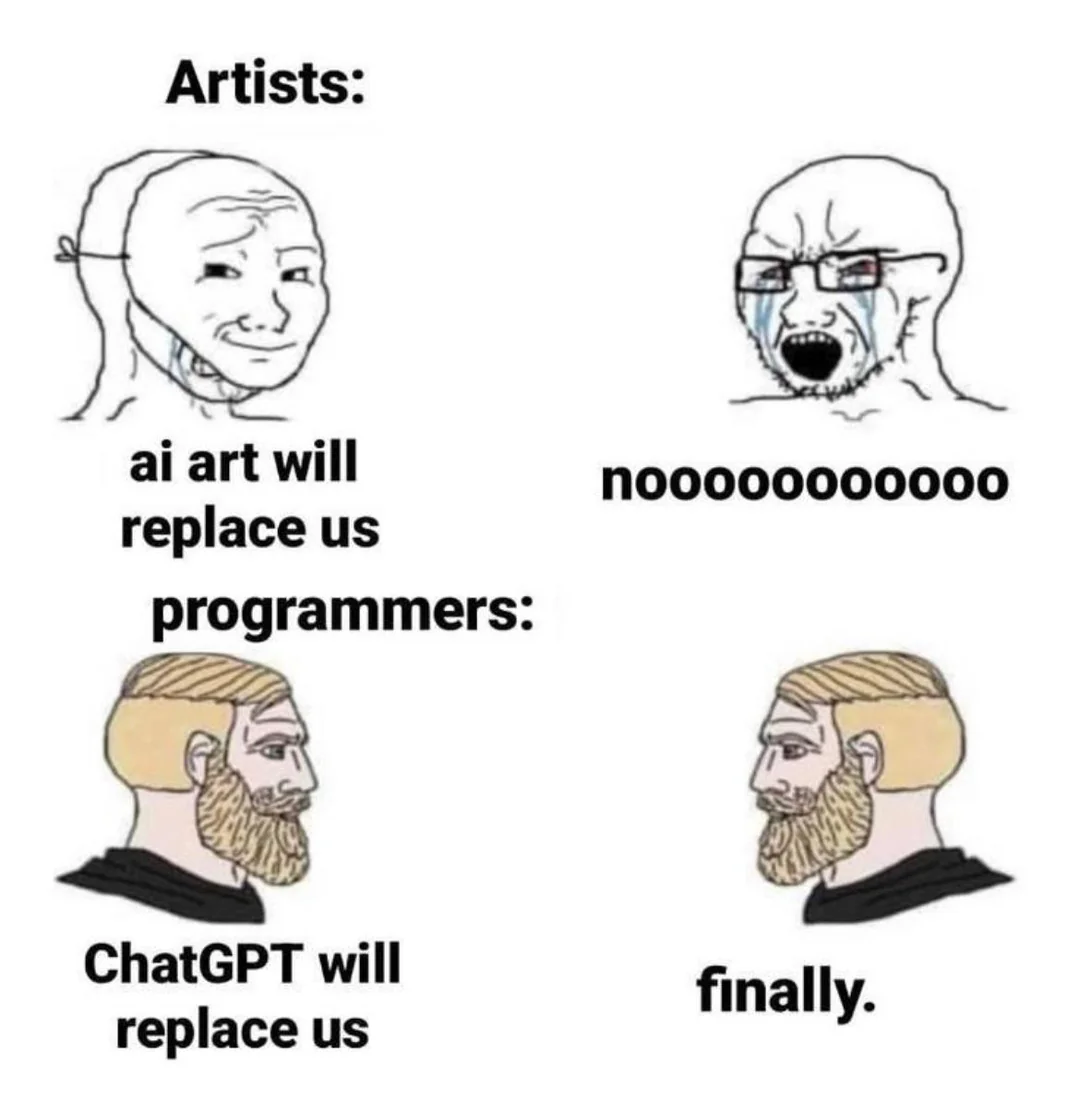
Meme of the day 😄

Source: r/ProgrammerHumor

The automation question

This isn’t the first time

Historical fears of technological unemployment:

Era Technology Fear Outcome
1810s Power looms Luddites destroy machines Factory jobs grew, weavers’ wages collapsed
1930s Mechanisation Keynes: “technological unemployment” Post-war prosperity
1960s Mainframes JFK warns of job losses Service sector expansion
1990s Personal computers Rifkin’s The End of Work (1995) New jobs created
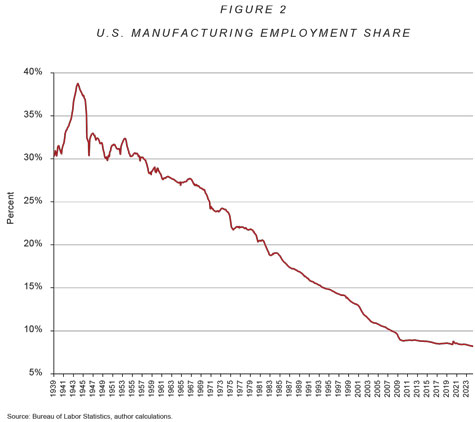
2010s Robots Manufacturing decline Local job and wage losses
  • Technology destroys some jobs and creates others
  • The net effect has been positive over time, but adjustment is painful

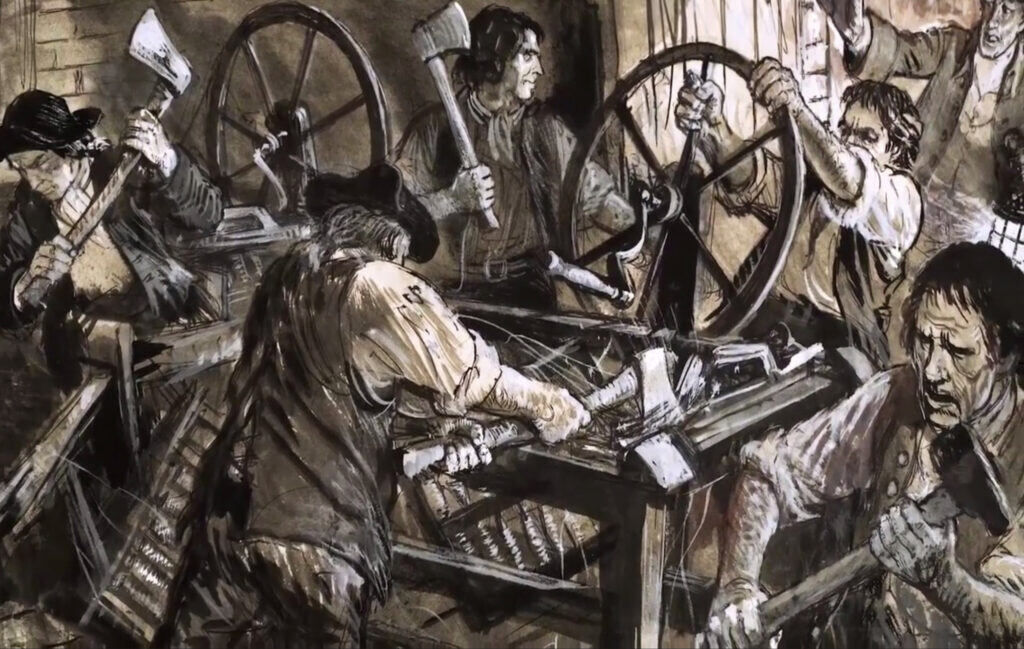
Rage against the machine: the Luddites

Source: Current Affairs

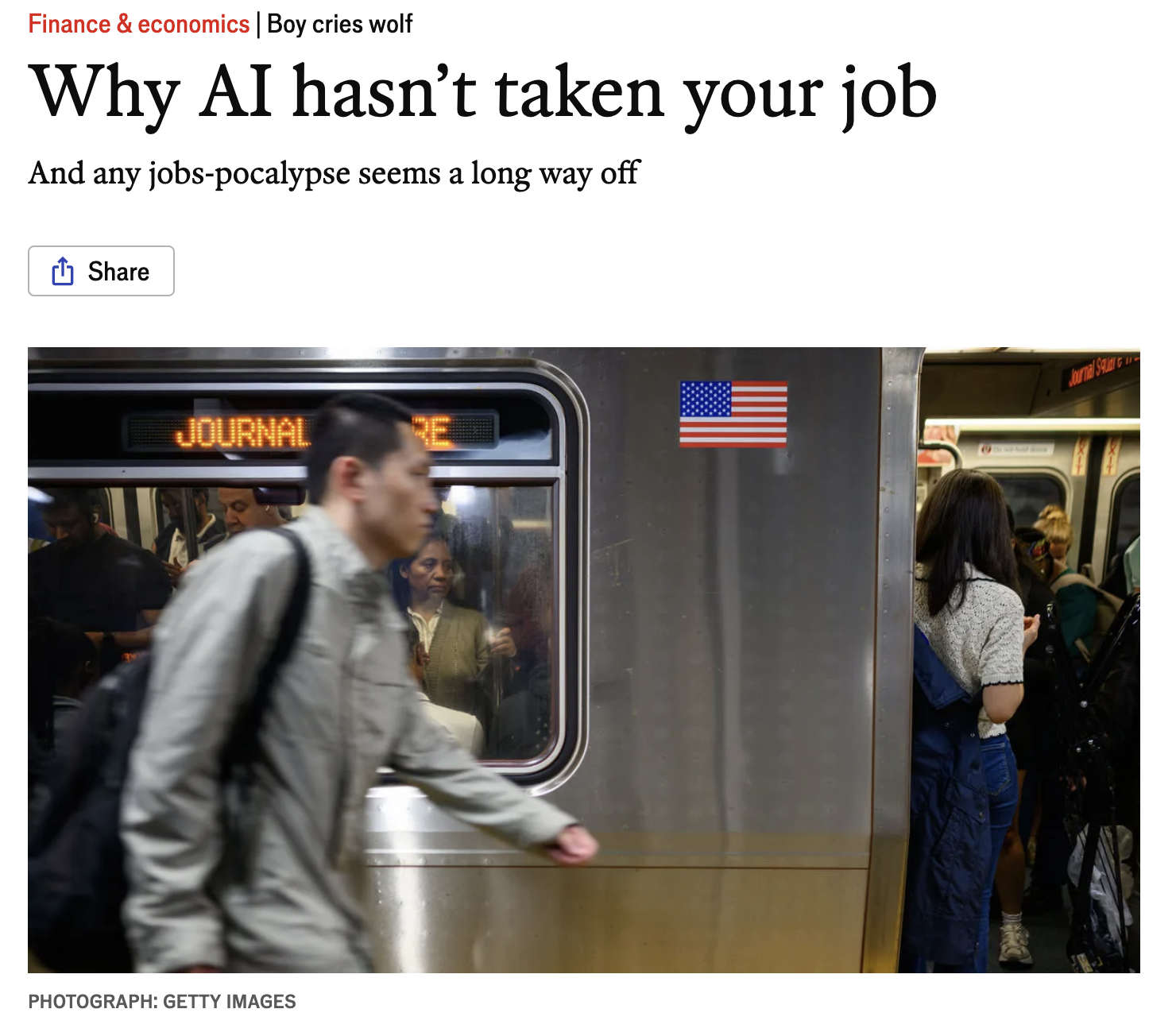
So far, fears of mass unemployment haven’t materialised. But past performance doesn’t guarantee future results! 😅

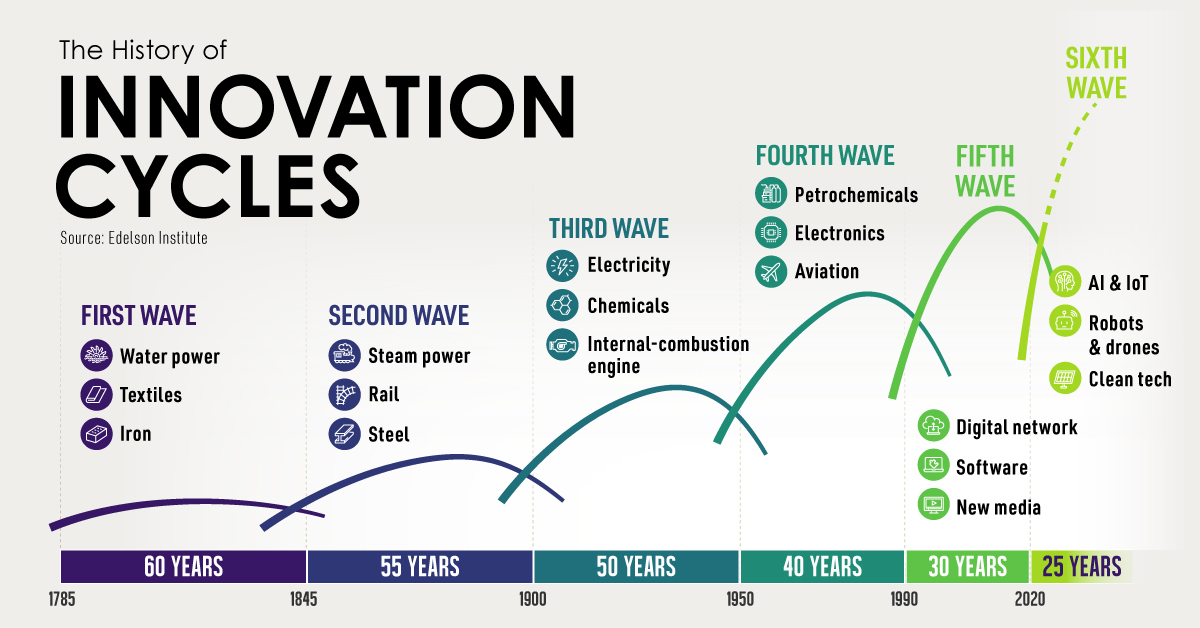
Why this time might be different

Previous automation:

  • Targeted physical tasks, leaving thinking to humans
  • Each machine did one task: a loom weaves, an ATM dispenses cash

AI is different:

  • Targets cognitive tasks too, including creative work
  • One model writes essays, analyses data and makes images
  • Improves fast

Counter-argument:

  • Similar claims were made before
  • We keep underestimating how people adapt
  • New tasks we can’t imagine will emerge

Source: Edelson Institute

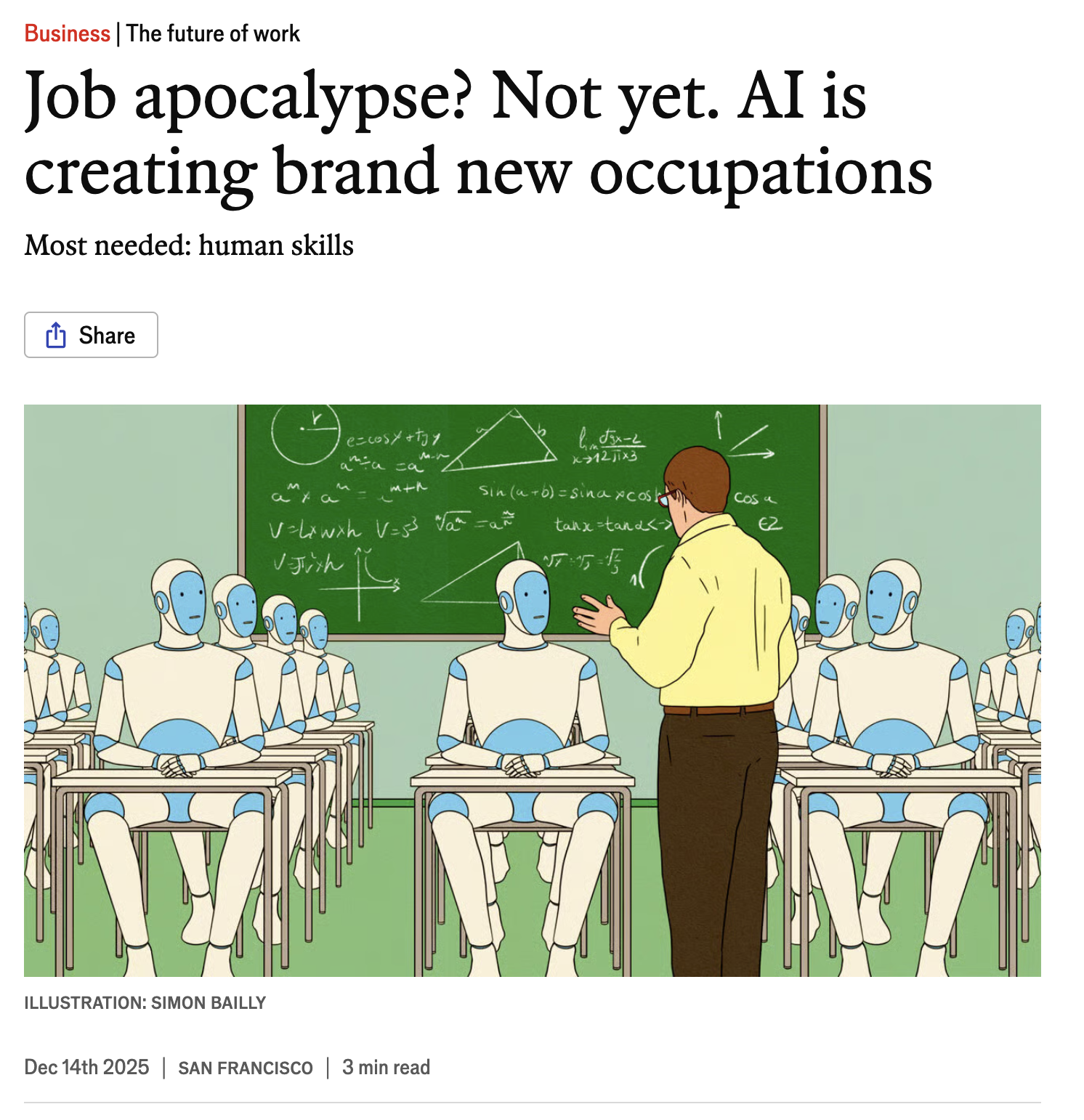
AI will change work. We don’t know how fast, or who loses out during the transition

Tasks vs jobs

Task-based view (Acemoglu & Restrepo, 2019; HBR explainer):

  • Think about tasks being automated, not jobs being replaced
  • Most jobs bundle many tasks, and AI may automate only some

Example: Lawyer

Task AI capability
Document review High
Legal research High
Contract drafting Medium-high
Client counselling Medium
Court appearance Low
Negotiation Low
Judgment calls Low

What changes for lawyers:

  • AI does the grunt work, so firms need fewer lawyers per case
  • Lawyers shift to counselling clients and arguing in court
  • The job survives, but what about the lawyers firms don’t hire?

Source: The Economist

Which tasks are most exposed?

High exposure to AI:

  • Content generation (text, code, images)
  • Data analysis and pattern recognition
  • Translation and summarisation
  • Customer service (text-based)

Lower exposure (for now):

  • Unpredictable physical work (construction, plumbing)
  • In-person work (nursing, firefighting)
  • Real-time judgment (emergency medicine, crisis management)
  • Close personal relationships (therapy, social work)

Exposure by occupation (it rises with wages, with exceptions):

Occupation Exposure
Telemarketers Very high
Accountants High
Paralegals High
Software developers Medium-high
Teachers Medium
Nurses Medium-low
Electricians Low
Plumbers Low

Source: Eloundou et al. (2023)

Current evidence

What are people using AI for?

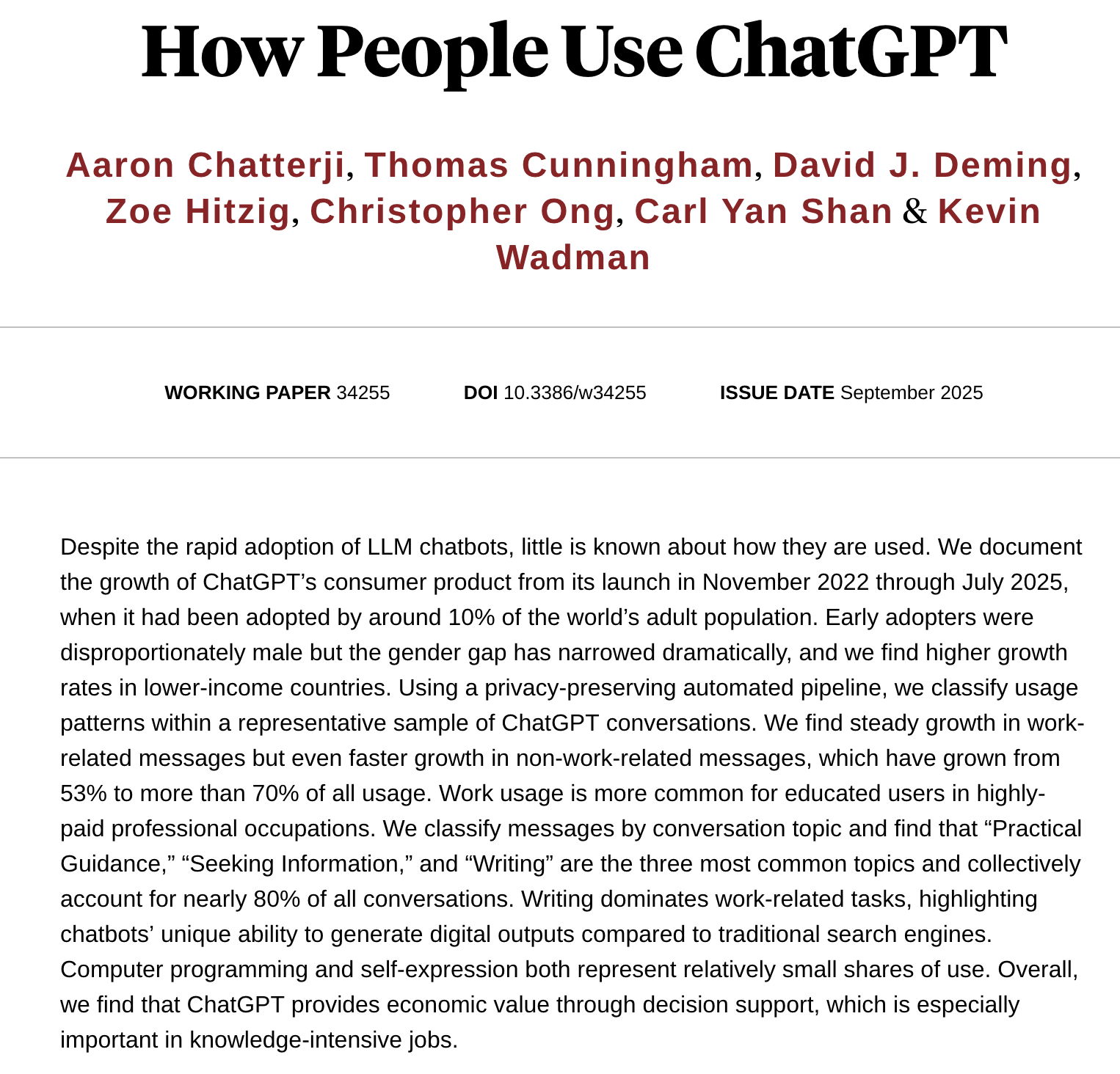
OpenAI’s research on ChatGPT use (2025):

Category Jul 2024 Jun 2025
Practical Guidance ~29% ~29%
Writing ~36% ~24%
Seeking Information ~14% ~24%
Technical Help ~12% ~5%
Multimedia ~2% ~7%
  • Only 27% of use is work-related
  • Work messages (Jun 2025): Writing ~40%, Practical Guidance ~24%, Technical Help ~10%
  • Writing’s share fell as people found other uses
  • Technical help may have moved to coding tools (Copilot, Codex)

Source: OpenAI (2025)

Productivity effects: early evidence

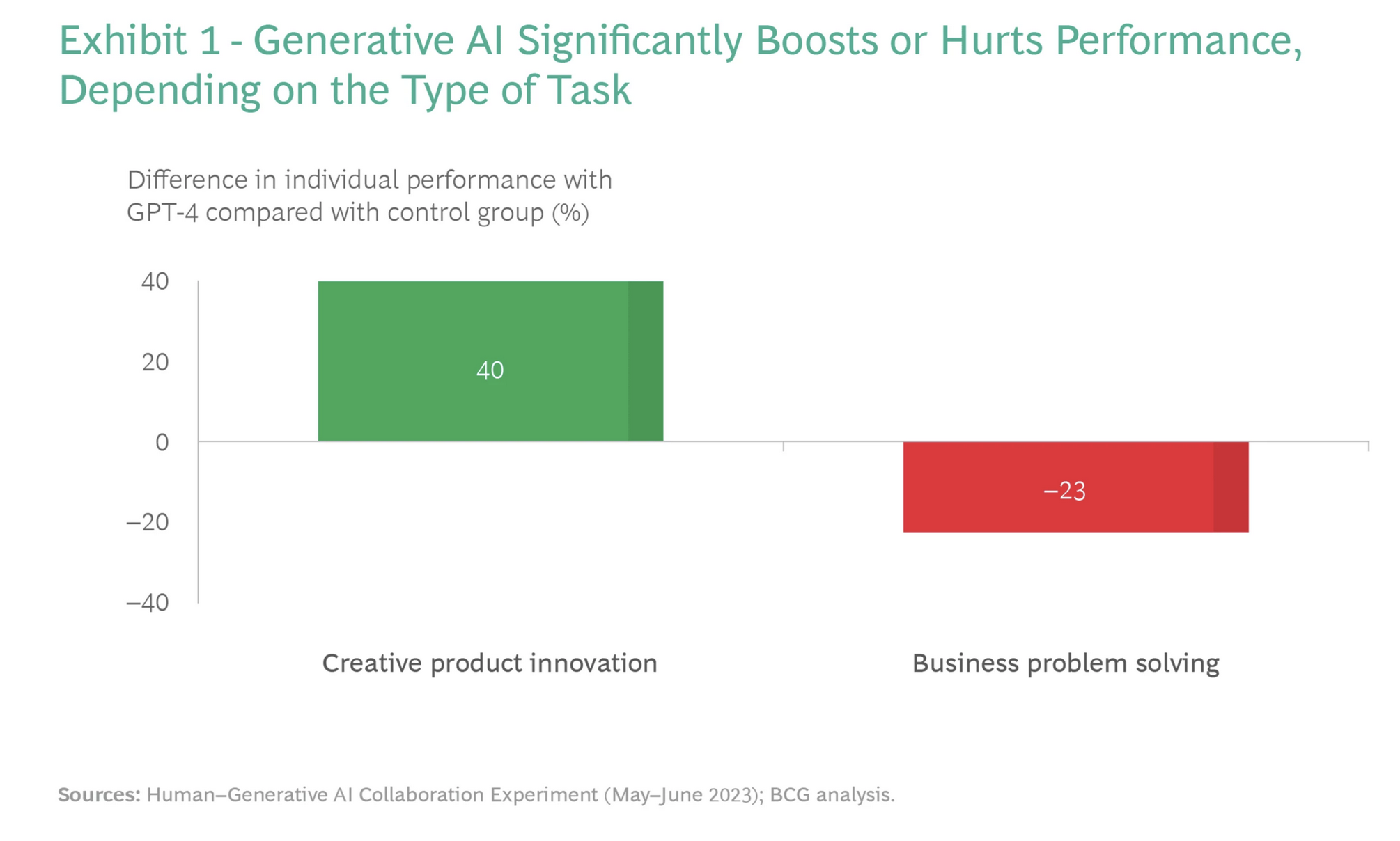
Positive effects:

Caveats:

  • Most studies are short-term
  • Often sponsored by AI companies
  • Lab settings differ from real work

Across studies:

  • Novices gain more than experts, so skill gaps narrow
  • Experts sometimes do worse with AI
  • Benefits concentrated in specific tasks

The graduate job drought

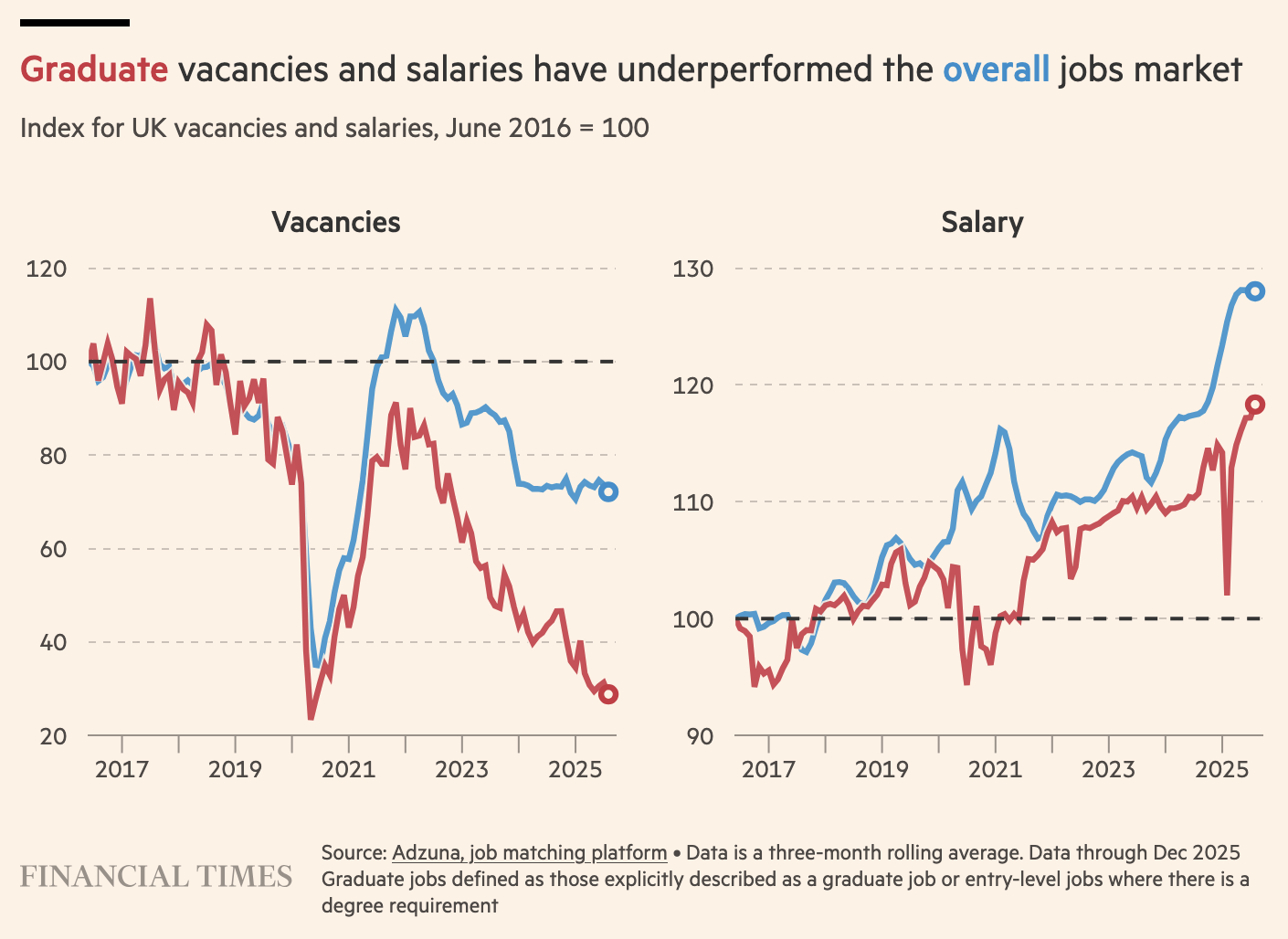
Evidence (2024-2026):

UK (Financial Times, 2026):

  • Graduate vacancies at their lowest outside the pandemic
  • Hiring stabilised in autumn 2026 (+4%, ISE)

Why employers cut junior roles:

  • AI does tasks juniors used to do
  • AI needs no healthcare, holidays or mentoring

Source: Financial Times (2026)

If companies replace junior roles with AI, where do you get your first job?

But the aggregate numbers are confusing

What we’re not seeing (yet):

  • Mass unemployment
  • Dramatic productivity surge
  • Clear sectoral collapse

What we are seeing:

  • Slower hiring rather than mass firing
  • Some sectors growing, others shrinking
  • Effects concentrated in some regions
  • Young workers are hit, experienced ones much less

Possible reasons:

  • Adoption takes time (most firms are still experimenting)
  • Current AI handles many tasks poorly
  • Regulation, contracts and inertia slow adoption

Source: The Economist

What careful estimates show

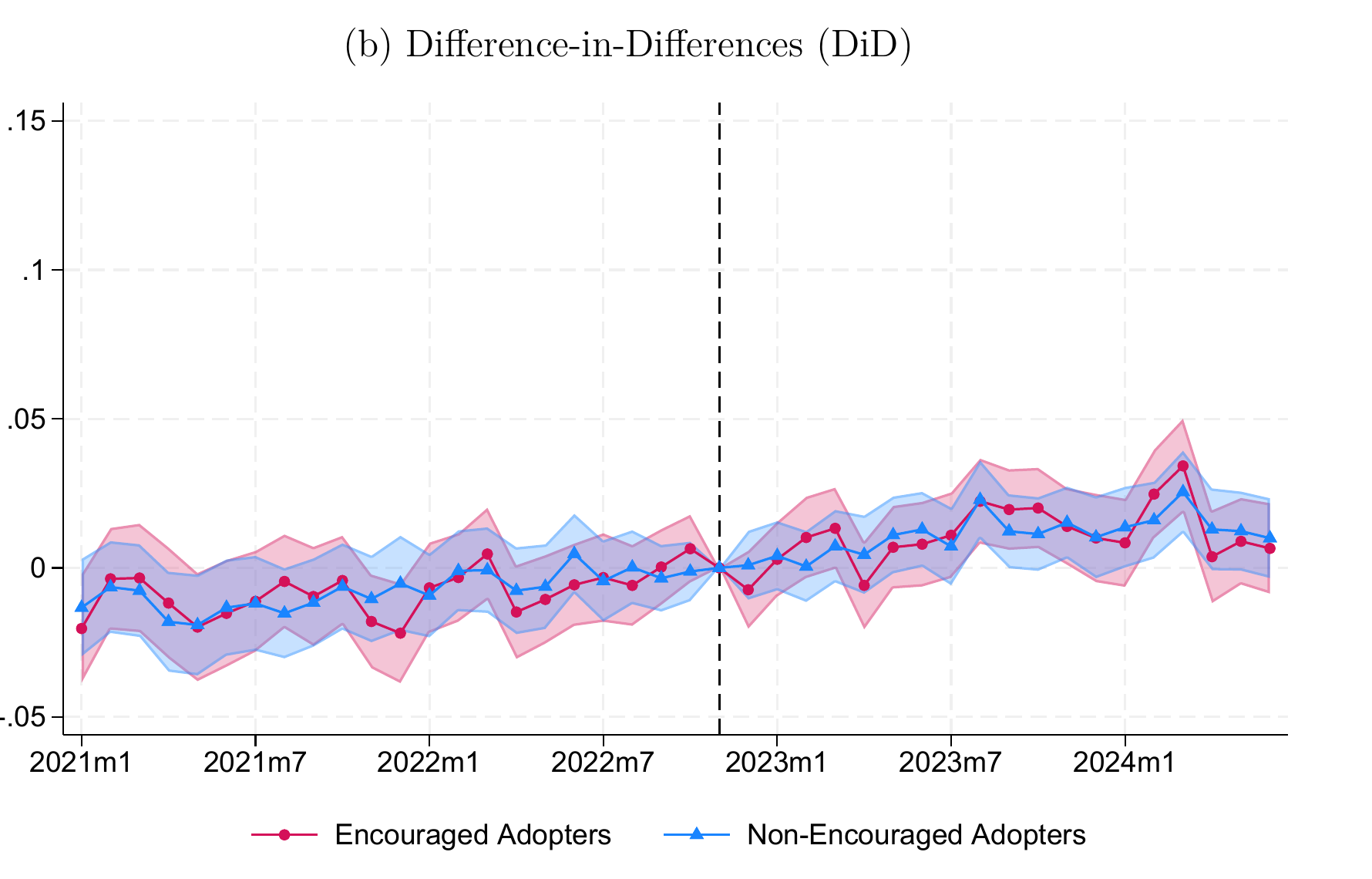
Humlum & Vestergaard (2026):

  • 25,000 Danish workers, 7,000 workplaces
  • Surveys linked to payroll records, not self-reports
  • Compares adopters and non-adopters, before and after ChatGPT
  • No effect on earnings or hours after two years (rules out effects above 2%)
  • Adopters saved about 3% of their hours (2025 estimate)

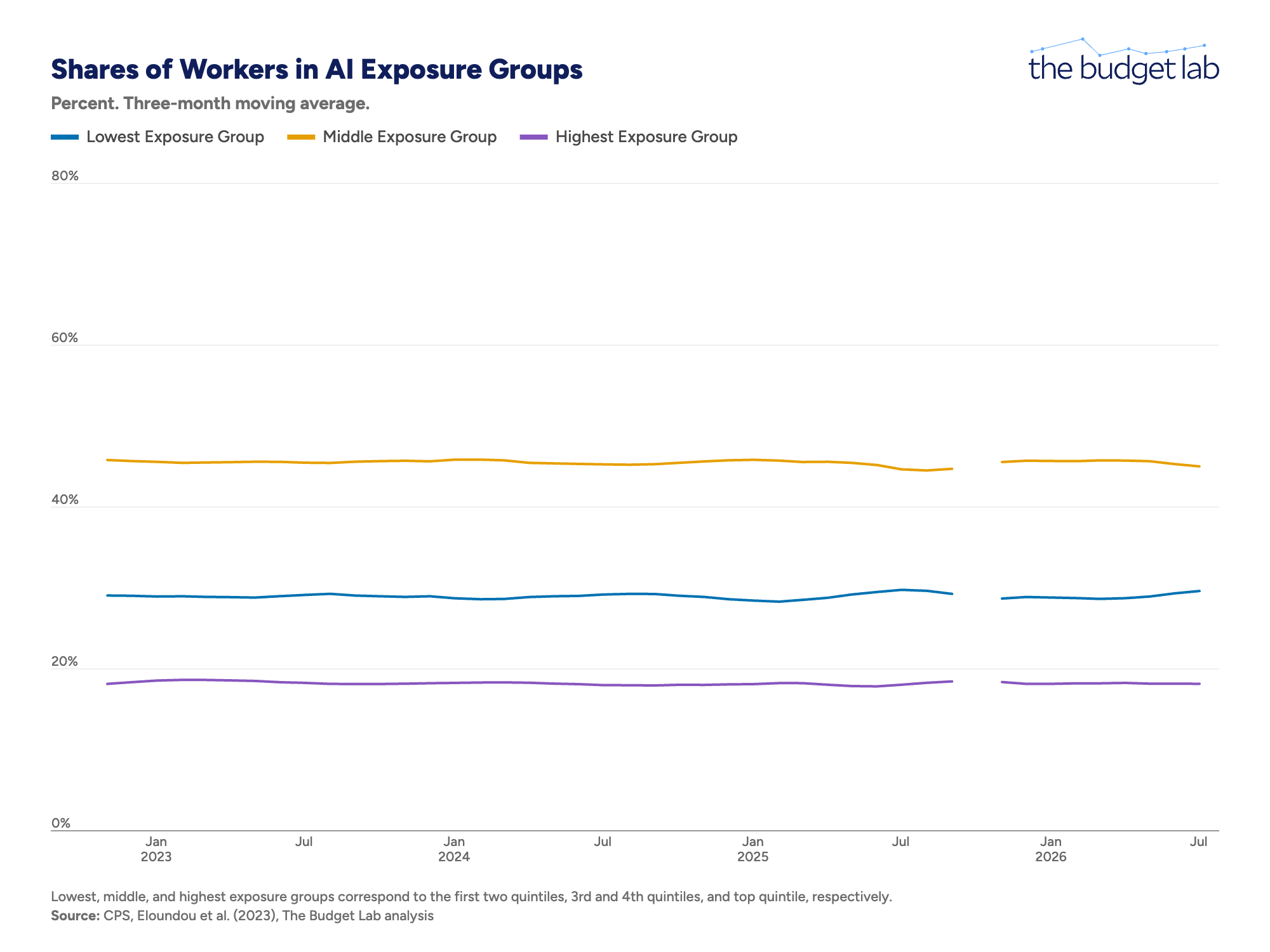
Yale Budget Lab tracker:

  • Share of US workers by AI exposure (low, middle, high)
  • Monthly CPS data to September 2026
  • The three shares are flat since 2023

Economic scenarios

The optimistic view

Augmentation:

  • AI makes workers more productive
  • Higher productivity → higher incomes → more demand → more jobs

New tasks:

  • New kinds of work: prompt engineering, AI training, oversight
  • Jobs we can’t imagine yet, like social media manager in 1990

Past waves:

  • Technology has always created more jobs than it destroyed
  • “Lump of labour fallacy”: there isn’t a fixed amount of work

The pessimistic view

Displacement:

  • AI replaces workers faster than new jobs emerge
  • The transition could be long, and many workers never recover
  • Workers’ skills don’t match the new jobs

Polarisation:

  • High-skill jobs pay more
  • Low-skill service jobs persist (hard to automate)
  • The middle is hollowed out, so inequality rises

Who gains:

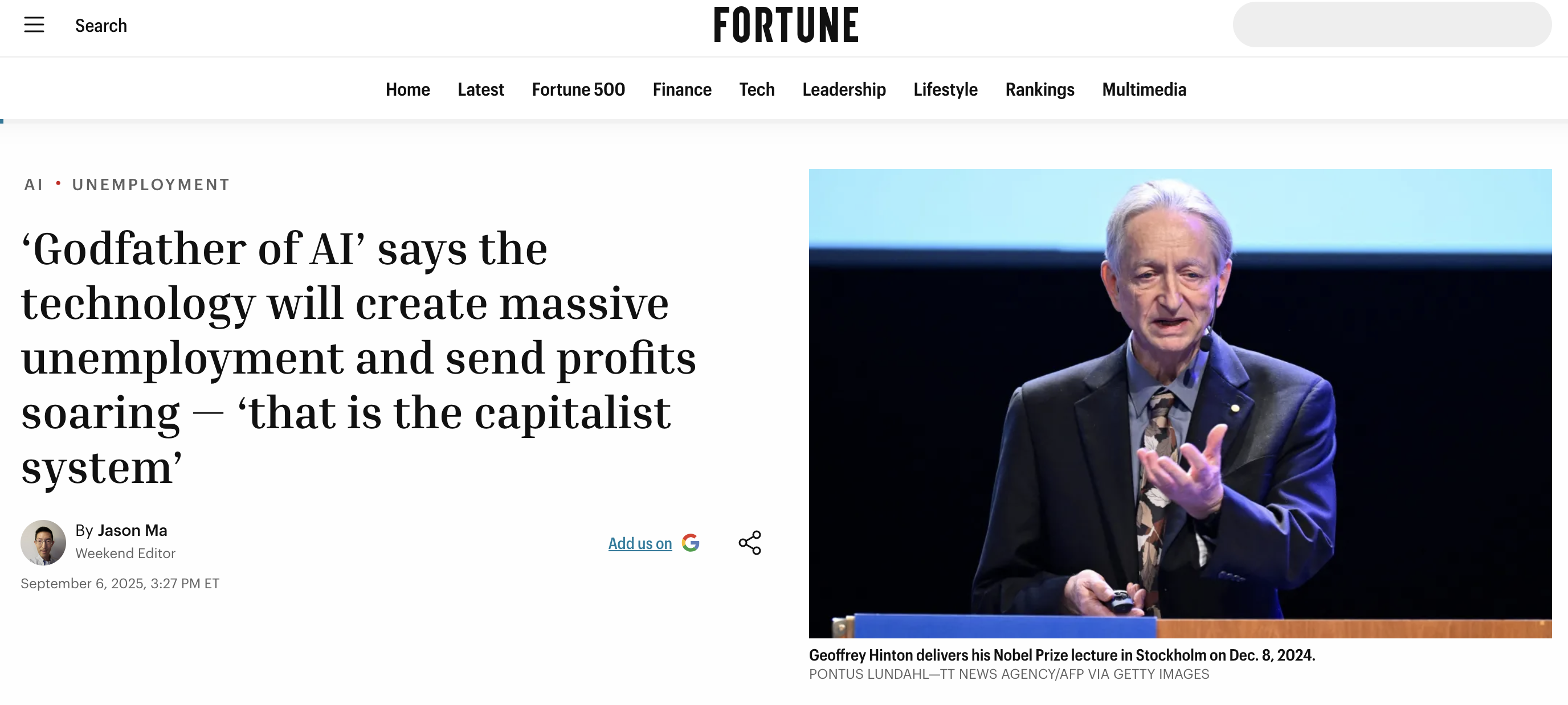
  • Productivity gains go to capital (owners), not labour (workers)
  • Wages race to the bottom

Source: Fortune

Pessimists note that the horse population never recovered from the car. What if we are the horses?

What economists think

Economist polls (Clark Center, 2023 and 2026):

  • Most are uncertain whether AI will raise inequality (10 agree, 19 uncertain, 3 disagree)
  • Few expect a big rise in unemployment (5 agree, 25 uncertain, 11 disagree)
  • Most expect less certain returns to education (27 of 41 agree)

MIT economists:

Jones (2026), on leave at Anthropic:

  • Growth is held back by weakest links: tasks AI can’t do yet
  • Big gains may take decades, giving workers time to adjust

Source: Noah Smith

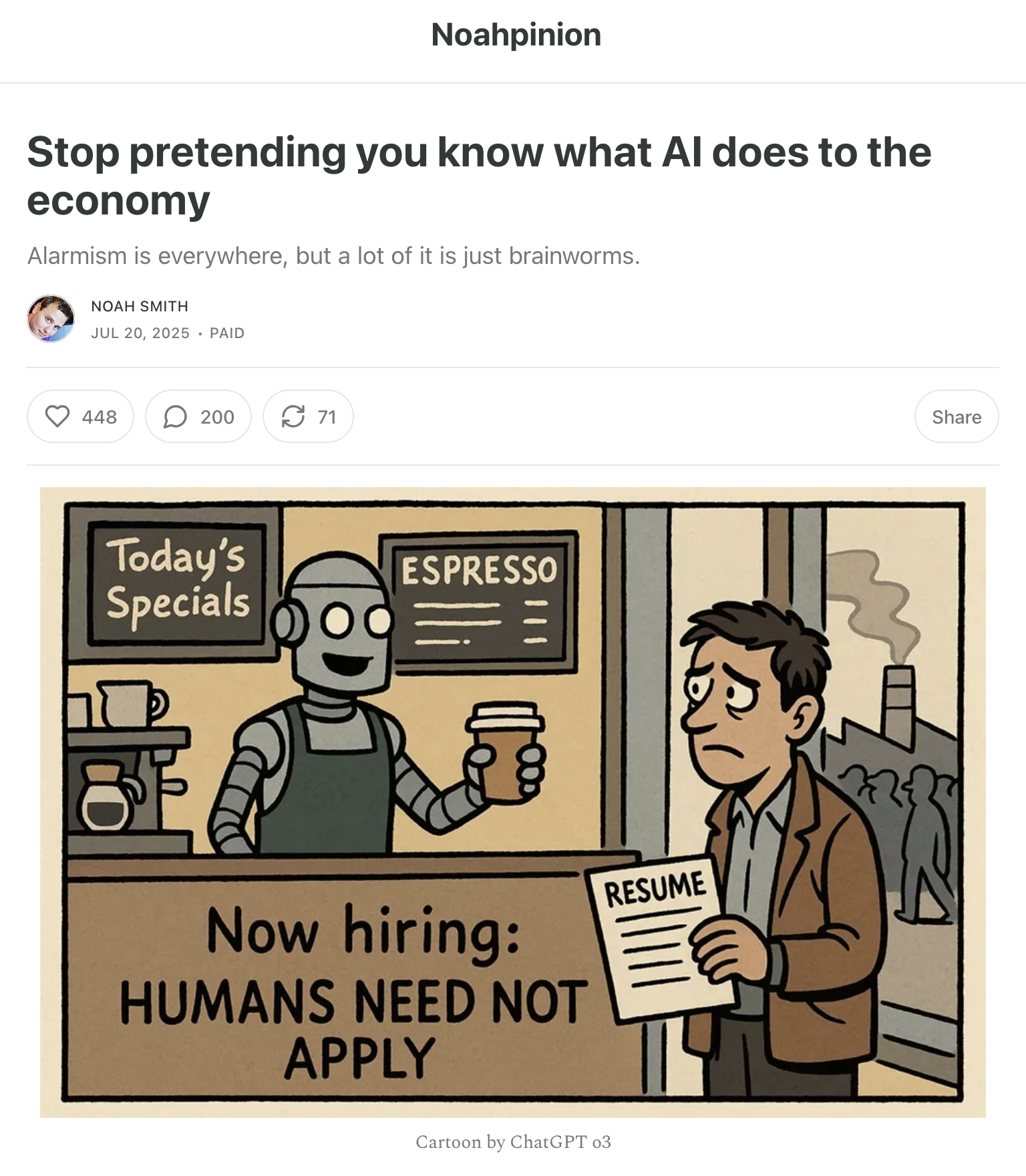
Nobody knows. Anyone who claims certainty is selling something. The range of possible outcomes is very wide

Discussion: your predictions

Quick exercise:

Think about a job you might want after graduation

  1. List 3-4 main tasks in that job
  2. For each task, could AI do it?
    • Now?
    • In 1 year?
    • In 5 years?
  3. What tasks would remain human?
  4. How might the job change rather than disappear?

Share with us!

  • What job did you pick?
  • Which tasks seemed most automatable?
  • Which seemed most human?
  • Did this make you more or less worried?

What does this mean for you?

Skills that may remain valuable

Social skills (Deming, 2017):

  • Building relationships and trust
  • Emotional intelligence
  • Cultural and contextual judgment

Knowing how to work with AI (WEF Future of Jobs Report, 2025):

  • When to use it, and when not to
  • Checking AI outputs critically
  • Asking the right questions (garbage in, garbage out)

Domain expertise (McKinsey, 2025):

  • Judgment in novel situations
  • Ethical reasoning and values
  • Taking responsibility for decisions

Source: Harvard Business School

“Soft skills”, once dismissed as fluffy, may be the hardest to automate

Adapting to an AI-influenced economy

Be AI-literate:

  • Know what AI can and can’t do
  • Use the tools well and spot the hype
  • This course is a start! 🤓

Build skills that complement AI:

  • Orchestration: directing, checking and combining AI outputs
  • Don’t over-specialise too early

Keep perspective:

  • Your career will last 40+ years, and AI in 2066 will look very different
  • Learning how to learn beats any specific prediction

Become someone who can keep learning!

The graduate market in 2026

  • Entry-level hiring is down in AI-exposed jobs, so competition is intense
  • A degree alone is no longer enough

How to prepare:

  • Build applied projects that show you use AI well (a portfolio beats a transcript)
  • Get internships or work experience while you can
  • Build a network (still a human activity!)
  • Be open to non-traditional paths

The job market changed while you were in university, and that is hard. Learning to work with AI helps

Source: Fortune

What would you advise?

Scenario:

Your younger sibling is about to start university. They ask:

“What should I study? I keep hearing AI will take all the jobs. Should I even bother with a degree? What career should I aim for?”

  • What would you tell them?
  • What field would you recommend?
  • What skills should they prioritise?
  • How would you address their anxiety?

Points to discuss:

  • Education is more than job training
  • Chasing “hot” fields is risky
  • Nobody can predict the job market

Summary

Main takeaways

What we know

  • Past automation was net positive over time
  • AI exposes cognitive tasks too
  • Productivity gains are real but task-specific
  • No aggregate effect on earnings or hours yet
  • Entry-level hiring takes the first hit
  • Policy can push AI toward augmentation

What we don’t know

  • Augmentation or displacement?
  • How long the transition takes
  • Who loses out

For your career

  • Think tasks, not jobs
  • Complement AI rather than compete with it
  • Adaptability beats any specific bet on the future

Nobody predicted “YouTuber” in 1990. The jobs of 2036 probably don’t have names yet!

… and that’s all for today!