Welcome to Introduction to AI Applications!

Lecture 01: Introduction

Danilo Freire

Department of Data and Decision Sciences
Emory University

Welcome to DATASCI 101! 🎉

Lecture overview

Today’s agenda

  • Hello and welcome!
  • Instructor and TAs
  • Motivation and course overview
  • Assignments and grading
  • Course logistics

Course materials

Course website: https://danilofreire.github.io/datasci101

Course repository: https://github.com/danilofreire/datasci101

The website is the main hub for your learning. Assignments and group work files live in the repository

Canvas handles course administration: assignment submission, grades, and announcements

Please get to know both platforms, and ask me if you have questions 😉

Note

Please remember to check the course repository regularly for updates and announcements!

Nice to meet you! 😊

Instructor

A bit about me

Visiting Assistant Professor in the Department of Data and Decision Sciences

MA from the Graduate Institute Geneva, PhD from King’s College London, Postdoc at Brown University, Senior Lecturer at the University of Lincoln, UK

Research interests: computational social science, experimental methods, policy evaluation, political violence, organised crime

What about you? (time permitting!)

  • Now it’s your turn! 😉

  • Tell us your name, your major, and what you would like to learn in this course! 👋

My teaching philosophy

  • I love teaching and aim to make learning fun
  • Classes where students participate are the best!
  • Hands-on activities help you learn better
  • I am always available to help. And I mean it!
  • Tell me what is working and what is not 😉

Teaching assistants

  • The teaching assistants will be announced soon

  • They can help you with assignments, quizzes, and any questions about the course material

  • We are all here to help you! Ask questions in class, in office hours, or by email 😃

Office hours

What for and what not for

  • What office hours are for:
    • Applying tools in practice
    • Discussing problems with the assignments
    • Building your knowledge of AI and data science more generally
  • What they are not for:
    • Summarising lecture content
    • Solving the assignments for you

Class etiquette

  • A new topic can push you out of your comfort zone. If the pace is too fast, tell me. I expect your commitment, but I do not want anyone to fail
  • Your backgrounds vary, so some sessions will suit you better than others. If you are bored, help others or explore the extra resources (we have plenty!)
  • Please be respectful to each other
  • Ask questions whenever you need to!

Learning objectives

By the end of this course, you will be able to:

  • Explain the main ideas behind contemporary AI systems in plain language

  • Identify common failure modes of AI systems and the data issues that cause them

  • Read and assess claims about AI in news articles, product pages and policy documents

  • Design a small, realistic plan for an AI application: data needs, evaluation, and a basic harm-mitigation strategy

  • Reflect critically on ethical, legal and social questions raised by AI deployment

Course overview

Module Topic Key Questions
0 Orientation What is AI? What will we learn?
1 AI Design How are AI systems built?
2 Perception How do machines read, write, see and hear?
3 RAG & Pipelines How do we make AI reliable?
4 Ethics & Bias What can go wrong?
5 Policy & Impact How is AI regulated?
6 Applications Real-world uses and limits

What makes this course unique

  • We’re starting a new AI track in the Data Science curriculum! 🚀

  • This is the second offering of DATASCI 101, so help us make it great! 🙂

  • Why is this course different?

    • Non-technical approach: no heavy maths or programming required
    • Critical perspective: learn to ask the right questions about AI
    • Real-world focus: learn how AI is used in practice
    • For all backgrounds: humanities or STEM, this course is for you!

Logistics

Course information

Assignments

How you will be graded

  • Problem sets: ten, due on Thursdays at 11:59 pm (50%)
  • In-class quizzes: five (30%)
  • Final project: due on the last day of class (20%)
  • Late policy: 10% off per day late
  • Collaboration: discuss with classmates, but write your own code and submit your own work. AI is allowed if you disclose its use and understand the output
  • Academic integrity: see the syllabus for the university’s policy

Motivation:
What is AI anyway? 🤖

What is AI?

  • A simple definition: Artificial Intelligence (AI) is a branch of computer science that builds systems able to do tasks that usually require human intelligence
  • Those tasks include learning, reasoning, problem-solving, perception and language understanding
  • Narrow AI: built for specific tasks (e.g., virtual assistants, recommendation systems)
  • General AI: hypothetical systems with human-like intelligence across a wide range of tasks
  • Superintelligent AI: surpasses human intelligence in all aspects (still theoretical)
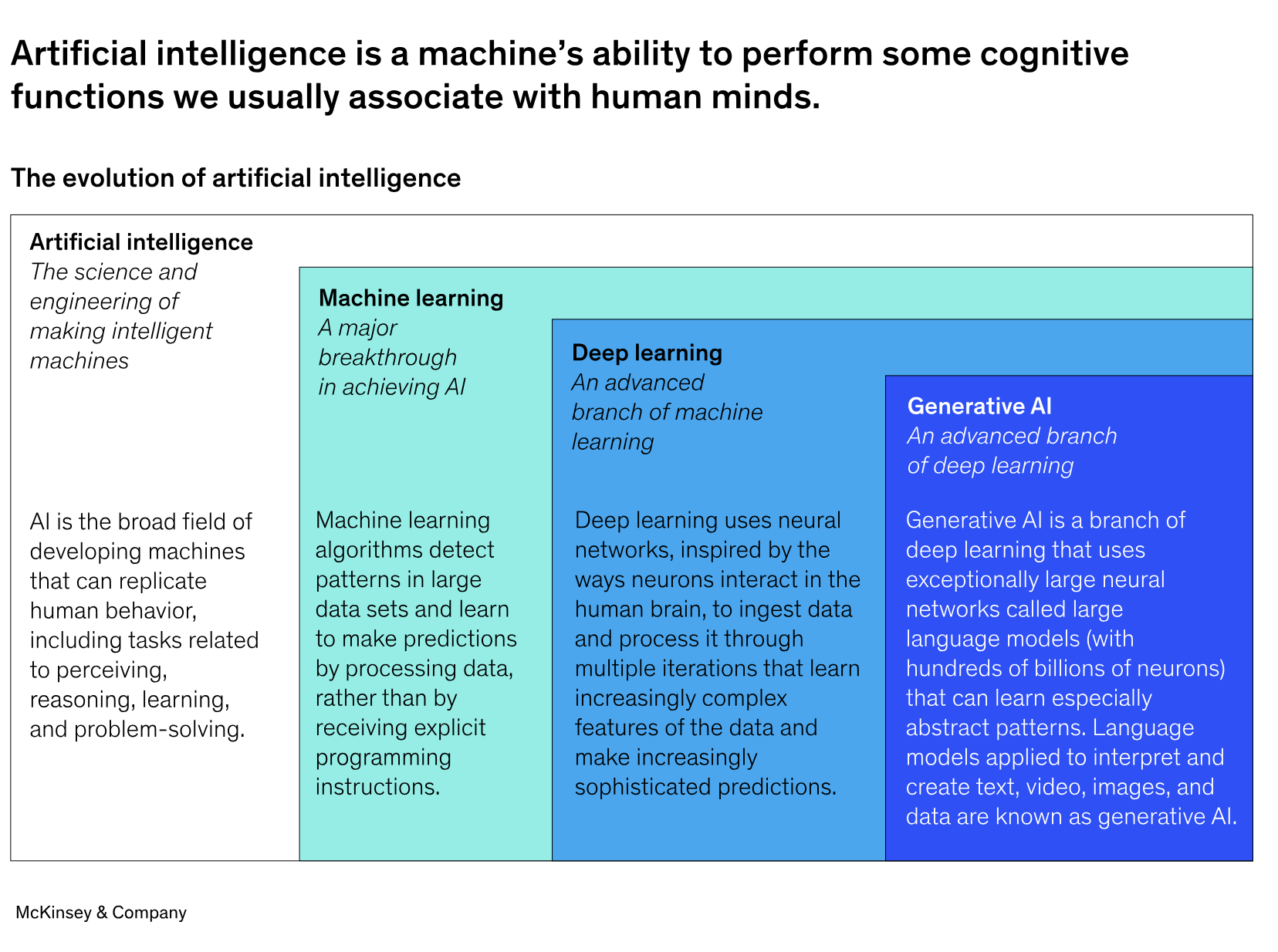
  • The techniques behind AI include machine learning, deep learning, and natural language processing

AI taxonomy

Source: McKinsey & Company (2024)

Why should you care about AI?

  • AI already shapes daily life:
    • Virtual assistants (e.g., Siri, Alexa)
    • Recommendation systems (e.g., Netflix, Amazon)
    • Dating apps (e.g., Tinder, Bumble)
    • Social media algorithms (e.g., Facebook, Instagram)
  • AI is changing industries:
    • Healthcare (e.g., diagnostics, personalised medicine)
    • Finance (e.g., fraud detection, algorithmic trading)
    • Transportation (e.g., autonomous vehicles, route optimisation)
    • Education (e.g., personalised learning, 24/7 tutoring)
  • Hype or not, these industries already work differently because of it
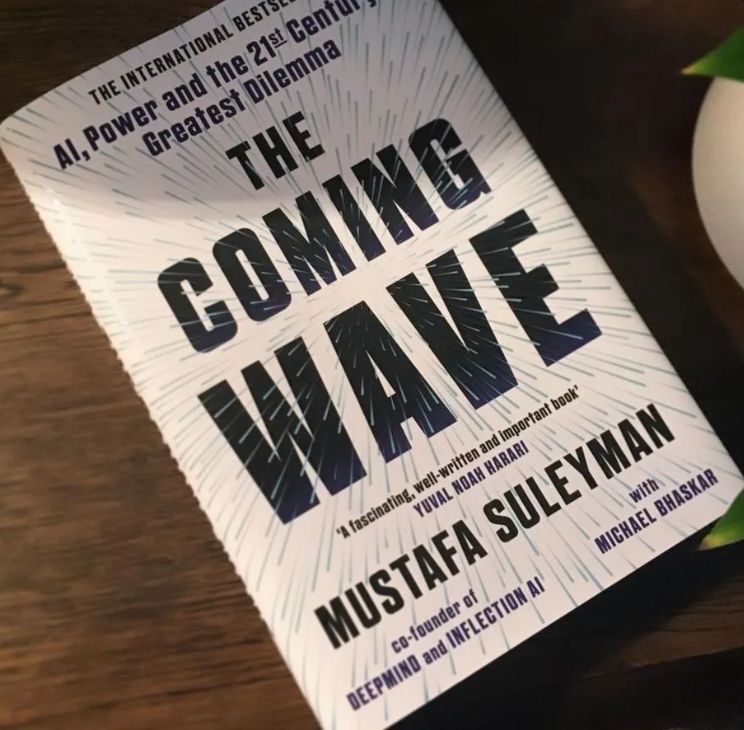
Key questions we’ll explore

  • What can AI actually do vs. what’s hype?
    • Does AI think, or does it match patterns?
    • Why does AI sometimes give wrong answers?
    • What can and cannot be automated?
  • Why do AI systems fail?
    • What happens when training data doesn’t represent everyone?
  • How does data affect AI behaviour?
    • Garbage in, garbage out
    • Who decides what counts as “correct” data?
  • What are the ethical implications?
    • Should AI make life-or-death decisions?
    • Who’s responsible when AI makes a mistake?
  • How should we regulate AI?
    • Innovation vs. safety trade-offs
    • What role should civil society play in governing AI?
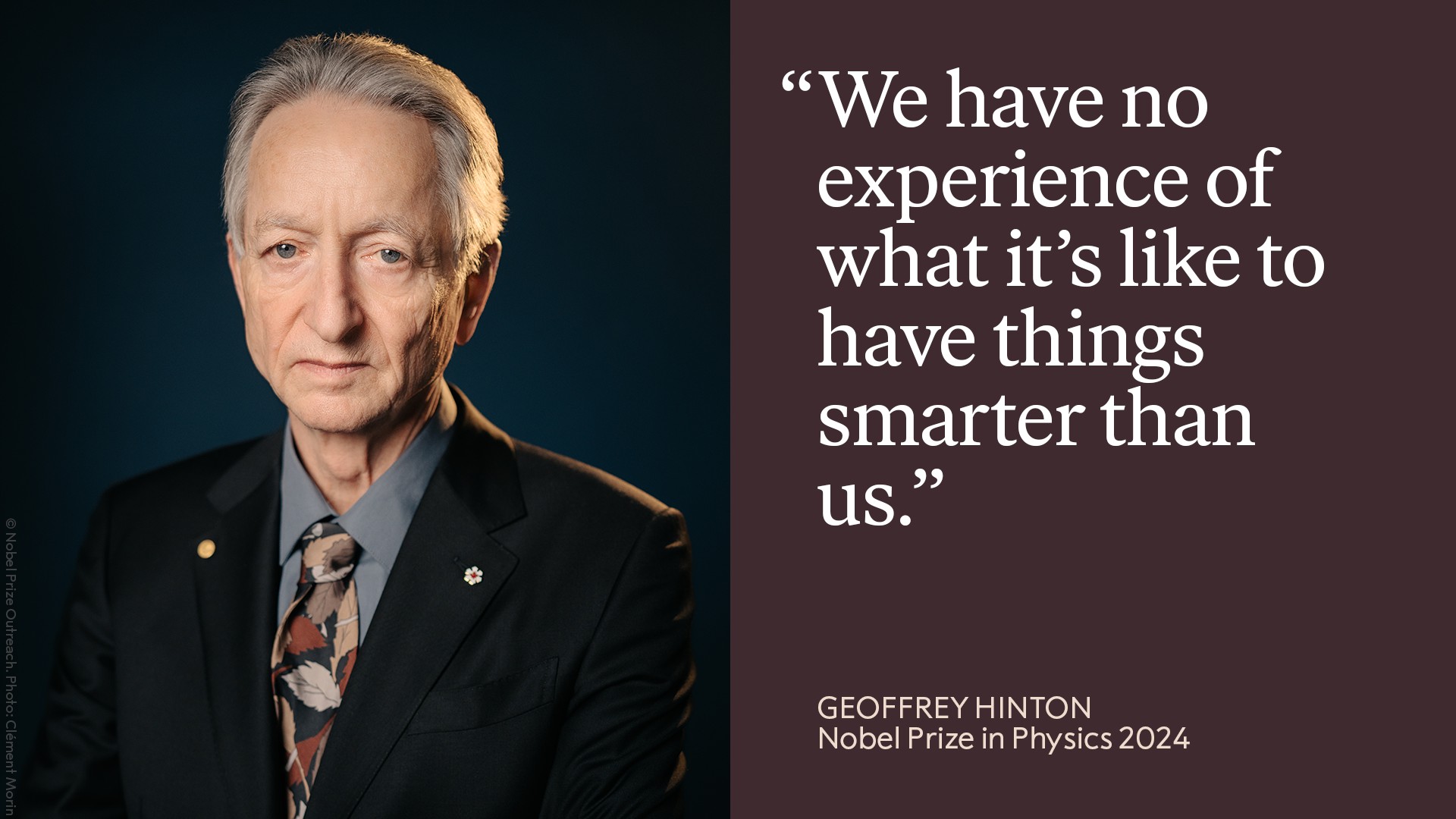
AI benchmarks and human performance
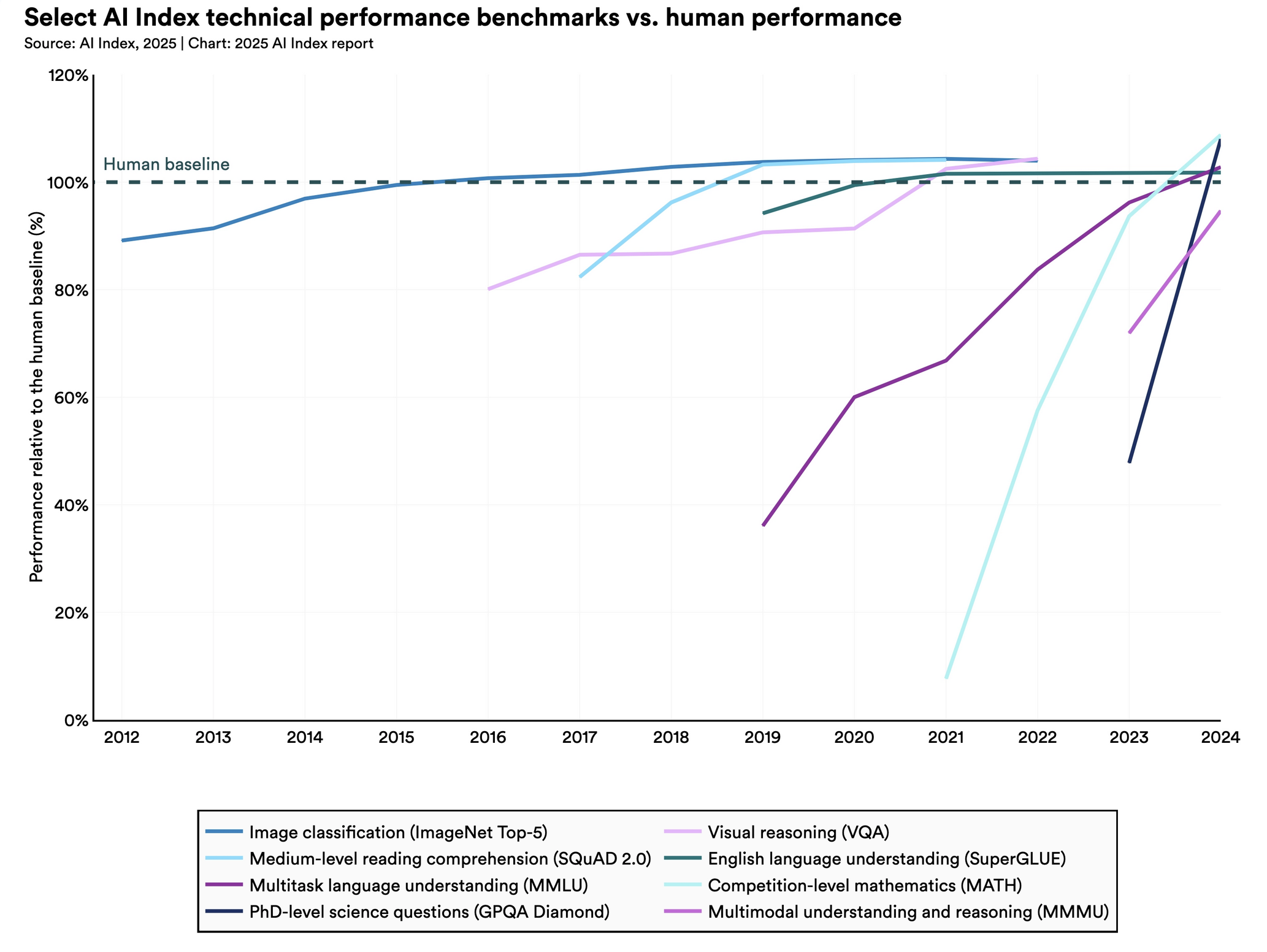
Source: Artificial Intelligence Index Report (2025)

True or false?

  • AI understands language like humans do
    • False! AI predicts likely next tokens (what are they?)
  • AI will replace all jobs
    • Probably not. AI changes jobs more than it removes them
  • AI hallucinations are easy to spot
    • False! AI states wrong information confidently, and it is not always obvious
  • We can test AI systems by deliberately trying to trick them
    • True! This is called adversarial testing or red-teaming
  • AI systems that learn without any human labels exist
    • True! This is unsupervised learning, and it finds hidden patterns automatically
  • AI systems can explain why they made a particular decision
    • False! Many AI systems are “black boxes”: we don’t know for sure how they reached their answers
  • The order of words in a sentence affects how AI processes it
    • True! Models tag each word with its position in the sentence
  • The same AI model can be fine-tuned for many different tasks
    • True! This is one of the most powerful aspects of modern AI

Next class

  • Topic: a brief history of AI and the recent shift
  • What we’ll cover:
    • From symbolic approaches to data-driven learning
    • The transformer architecture in plain language
    • How we got from early AI to ChatGPT
  • Main takeaway: ChatGPT only makes sense against the 70 years of ideas that led to it
  • Preparation: read the assigned articles on AI history and transformers
Suggested video: The AI Doc

… and that’s all for today! 🎉

Have a great day! 😊